

British artists Coldplay and Ed Sheeran sold out huge venues in India in early 2025. In Ahmedabad Coldplay filled the world’s largest cricket stadium, twice. Ticketing app Bookmyshow said it could have sold Ed Sheeran’s show in Mumbai 17 times over. Not only is Sheeran filling stadiums, he is also taking inspiration from local genres. His current single, Sapphire, gives western audiences a dose of contemporary Bollywood – an example of what Prime Minister Modi calls the living bridge. Over the last 15 years, India as a market has changed dramatically.
It was big, with fast growth and an emerging middle class, but complex and challenging. Indian multinational companies were looking outward and expanding into new territories. India was also a source of talent. The big story then was outsourcing, built on cost arbitrage.
In 2025 it is time to view the country through a third lens: that of innovation. Whereas in the past, innovation and best practice originated elsewhere and adapted to an Indian context, India today is increasingly a source of innovation from which others can learn. The country has grown beyond outsourcing to offer serious advantages of skills and scale. Large numbers of young Indians are eager to acquire proficiency in new technologies, are quick to adapt, and have a strong work ethic.
Two game-changers to consider. First, the creation of the India Stack, a set of open, API-based digital public goods on which a host of services are built. In August 2025 the number of UPI transactions exceeded $20 billion. It reduces corruption and has brought hundreds of millions of formerly unbanked citizens into the financial system. Second is ‘frugal engineering’, India’s response to limited resources – building products and services that are affordable, high quality, sustainable, and can be delivered or produced at scale to low-income customers – and now an imperative for others, given environmental degradation and the need to conserve resources. Examples exist in healthcare, agriculture, mobile technology and energy. Frugal engineering has found its highpoint in the work of the Indian Space Research Organisation. Its Chandrayaan-3 moon lander cost $75 million – less than the cost of the movie Interstellar.
India matters as a market, as a source of talent, and as a sandbox of innovation.
Millions of young Indians now have access to the same content as their international peers via platforms such as Netflix and Amazon. There’s an appetite for international brands, including pop stars. Much of the consumption is happening in tier 2 and tier 3 cities – places such as Jaipur, Indore, Vadodara and Bhubaneshwar, which reflect India’s growth story. They are home to aspirational young people who are new to brands which means their allegiances are yet to be fixed.
Loosely held loyalty and willingness to try new brands presents opportunities for UK companies.
The India-UK trade deal not only reduces tariffs, protects IP and makes professional mobility easier. It also creates a significant B2B opportunity. Every company operating in the corridor – whisky maker or widget distributor, British or Indian – needs design and communications services. This has not been addressed in the CETA, an oversight given that the creative sector contributes around GBP 126 bn to UK GDP. Article 8.19 of the CETA requires a Subcommittee on Trade in Services which is one forum in which the needs for creative services could be addressed. Whether done by bureaucrats or left to businesses themselves, market forces will prevail.
‘Design’ in this cross-border environment requires a high degree of ‘cultural fluency’ and the ability to understand the context in which a product or service is sold.
Take the Indian hole-in-the-wall liquor store and how colour codes and bottle shapes play a fundamental role in customers’ perceptions and choices in a dark market where advertising and other brand-building opportunities are limited. Old Monk’s iconic stubby bottles are a powerful and widely recognised brand attribute. Or the motivations of the two million Indians studying overseas this year. What appeals to an English-speaking young woman in Tamil Nadu where female literacy rates are high versus a boy from a Marathi-medium school in Maharashtra may be very different. One size doesn’t fit all.
There are hot new brands emerging in India to meet booming domestic demand. Indians are one of the fastest growing groups of travellers, both domestic and international, and travel accessories is a thriving market. Mokobara’s cool-looking, durable, funky luggage would not look out of place on Kensington High Street, but it might need to make its brand story more cosmopolitan as well as contemporary.
Many Indian companies, particularly incumbents, have had a large captive local market and not felt the pressure to invest in design and communications. To compete overseas they will need to recognise that their past glories may not make the grade. Even keeping market share among young media-savvy Indians may demand that shift in perspective.
Opportunities in the corridor come in many guises and cut both ways. India is seeing growth in private universities, some new, some rebranding. Some are exploring overseas markets where decisions about education will be framed differently. These institutions need brand stories that resonate with international audiences. UK defence contractors are keen to manufacture under license in India as part of the Make in India strategy. Firms must be able to appeal to local decision makers by connecting to the Make in India strategy, and the drive for aatmanirbharata (self-sufficiency). Technology exchange is a growth area. But technology is only one side of the equation. Culture matters.
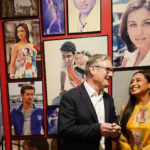
Musicians make headlines with sell-out gigs but to do so they employ huge backstage crews. So does the film industry – and with Sir Keir Starmar announcing that Indian cinema will use the UK as a location for future films, such prospects will only grow.
The big opportunity in the coming decades in UK-India trade is the work that must be done diligently without fanfare, behind the scenes: marketing collaterals remade in local languages; presentations pitched to new partners; rebrands; tweaks to product design to suit local tastes; messaging that resonates with new consumer personas. These are the jobs for the guitar technicians of the design and communications world, the talented cogs who will speed up the wheels of trade.
Mark Hannant is a creative services entrepreneur and author of ‘Midnights Grandchildren: How young Indians are disrupting the world’s largest democracy’. He is co-located in London and Mumbai.
This article was exclusively written for Gateway House: Indian Council on Global Relations. You can read more exclusive features here.
For interview requests with the authors, or for permission to republish, please contact outreach@gatewayhouse.in.
© Copyright 2025 Gateway House: Indian Council on Global Relations. All rights reserved. Any unauthorized copying or reproduction is strictly prohibited.