SLQ Courtesy: Wikimedia Commons
19 December 2016

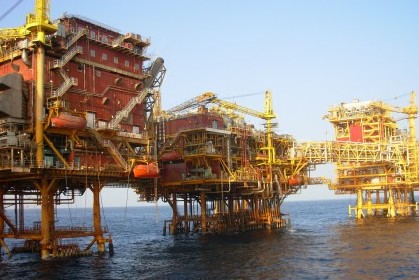
LNG strategies for the EU and India

India’s gas consumption is lower than the EU’s, but it too, like the EU, relies heavily on imports. With LNG likely to remain a key part of India’s gas supplies in the future, and given recent changes in the global market, what is the future potential of LNG imports for the EU and India? What are the best energy policies for the two regions?
India+Reliance+petrochemical+plant Courtesy: bdnews24
14 December 2016

Three tiers of energy security for India

India imports 80% of its oil and 80% of the imports are from vulnerable regions. This high-cost, high-risk approach is not sustainable, and the current low price of oil offers India an opportunity to secure its long-term energy needs by taking three concurrent steps: diversifying supply sources, investing in oil fields, and using financial instruments

Small Oil fields Wikipedia Courtesy: Wikipedia
24 November 2016

Independent oil firms: a fresh spurt?

The Indian oil industry is changing. The recent bidding for Discovered Small Fields saw the emergence of small, independent oil explorers in a country that has been dominated by state-owned companies and only a few private sector firms

Baka-charging-station_cropped Courtesy: Sass Peress / Wikipedia
3 December 2015

Cheap finance for climate change

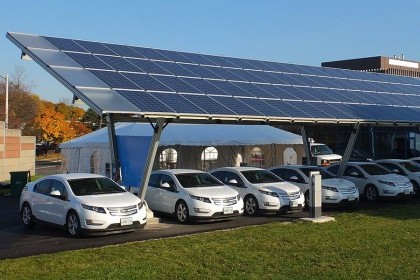
The Climate Conference in Paris offers the globe a chance to arrive at a firm action plan—and underpinning this chance are advances in solar and electric vehicles technology. If the Paris talks focus on making such technology and related finance available to countries like India, we can move closer to achieving climate goals

OIl Tech Flickr Courtesy: epSos.de / Flickr
29 October 2015

How technology can cap oil prices

Developments in electric vehicles, battery technology, and renewable energy can make oil, coal, nuclear power interchangeable, if the appropriate technology is developed and marketed well.  And since the benefits include a permanent cap on energy prices, India must promote  its own industries in these areas and not remain a passive beneficiary.

nuke power plant Courtesy: Pixabay
15 October 2015

Why India-U.S. energy ties are stuck

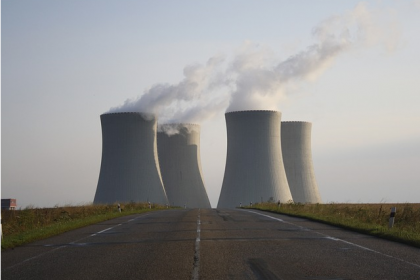
Even as India and Germany move ahead on energy cooperation, India-U.S. energy collaboration is stranded in the three key areas: nuclear power, shale gas, and solar energy. But with cheaper energy imports due to the fall in fossil fuel prices over the past 12 months, India can wait till it gets a better deal from the U.S.

Tuticorin_Thermal_Power_Station_at_Night_1_crop Courtesy: Ram Kumar / Wikipedia
13 August 2015

A plan for India’s ‘energy independence’

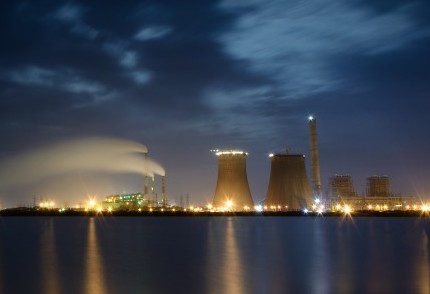
It is time for India to become autonomous on the energy front, even though it is, and will remain, a large importer of petroleum and coal. A combined strategy of diversification by using other forms of energy, and acquisition by buying oil fields, can help India reach this goal

oil rig Courtesy: Wikipedia
28 May 2015

De-risking rising oil prices

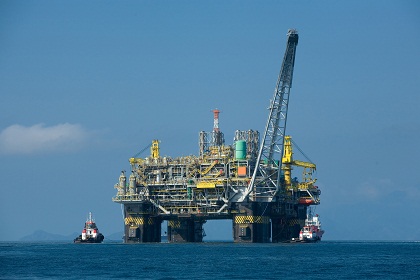
The price of petroleum has risen by almost 40% since February 2015 because of geopolitical tensions. This spike underlines the need for India to hedge its energy imports using a mix of financial markets and asset purchases

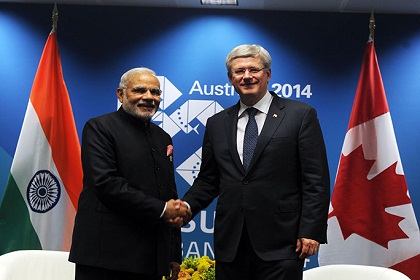
Modi-Harper Courtesy: Wikimedia commons
14 April 2015

India-Canada: partners on nuclear energy

Canada’s nuclear energy sector has a lot to offer India—the sale of uranium, joint development of technology and best practices on regulations. Nuclear energy co-operation is also an area in which Canada and India can make substantial advancements quickly. We should not let this opportunity slip by