Gateway House Courtesy: Telegrafi
6 November 2025

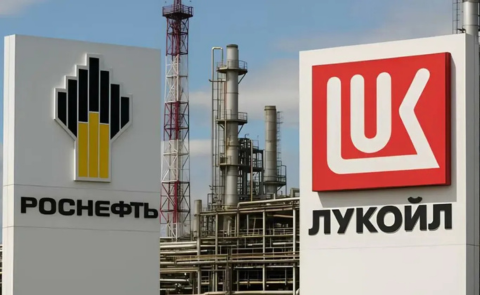
U.S. Sanctions on Russian oil giants

On October 22, 2025, U.S. President Donald Trump imposed sanctions on Russia’s oil giants, Rosneft and Lukoil. The move has clear geopolitical motives—to remove a major supplier from an oversupplied oil market. Indian oil companies, key buyers of Russian crude, now face pressure to cut imports, undermining India’s energy diversification and shaking global oil markets, including the U.S. economy.

U.S. Tariffs on Brics+ countries Courtesy: Gateway House
25 September 2025

U.S. Reciprocal Tariffs on BRICS+ countries

Under U.S. President Donald Trump’s reciprocal trade policy, the original five BRICS member countries account for the highest U.S. tariffs globally. India and Brazil are facing the highest tariffs of 50%, while China follows with a tariff of 34%, down from 145% earlier in the year. This infographic details the U.S. reciprocal tariff rates for each BRICS+ member and the sectors that are impacted.

Gateway House (4) Courtesy: Gateway House
18 September 2025

A new momentum for middle powers

The world is undergoing a profound transformation - not driven by the U.S., China, or Russia, but by small and medium states carving out their rightful space in the emerging order. With UN reform stalled, middle-power cooperation must organise effectively to push for a responsive multilateral system that works for all, ensuring institutions are reformed and made fit for today’s world.

IMEC map with source Courtesy: The China-Global South Podcast
19 June 2025

U.S.-China rivalry: Middle Powers’ playbook

In the current era of geopolitical uncertainty, the Middle Power states are deepening engagement with countries of the Global South while reducing their exposure to the U.S. and China. Manjeet Kripalani and Carlos Coelho spoke to Eric and Cobus from The China-Global South Podcast, on how countries like India and Brazil are navigating this increasingly contested world.

podcast MK Courtesy: Abhijit Chavda Podcast
27 May 2025

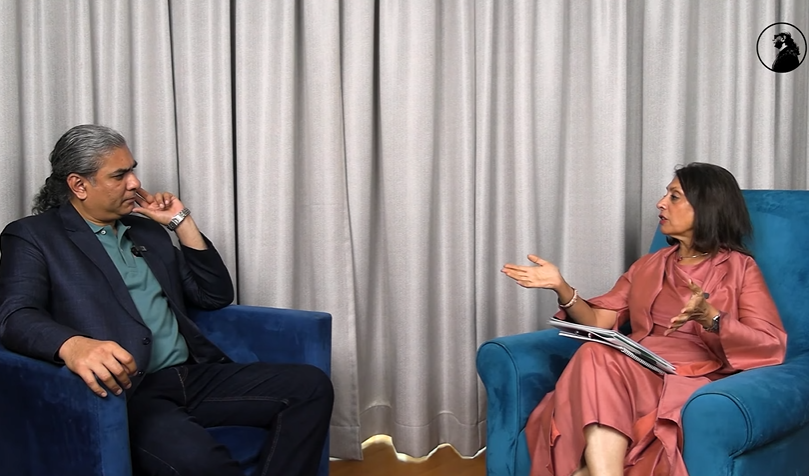
Emerging Middle Powers beyond U.S. and China

The rules-based world, perceived to be functional till last year, seems broken, giving way to an increasingly multipolar order. Manjeet Kripalani, Executive Director, Gateway House discusses in the Abhijit Chavda podcast, how emerging middle powers like India, Brazil, and Indonesia to name a few, have the heft to rewrite the rules of global trade and reform, away from U.S. and China.

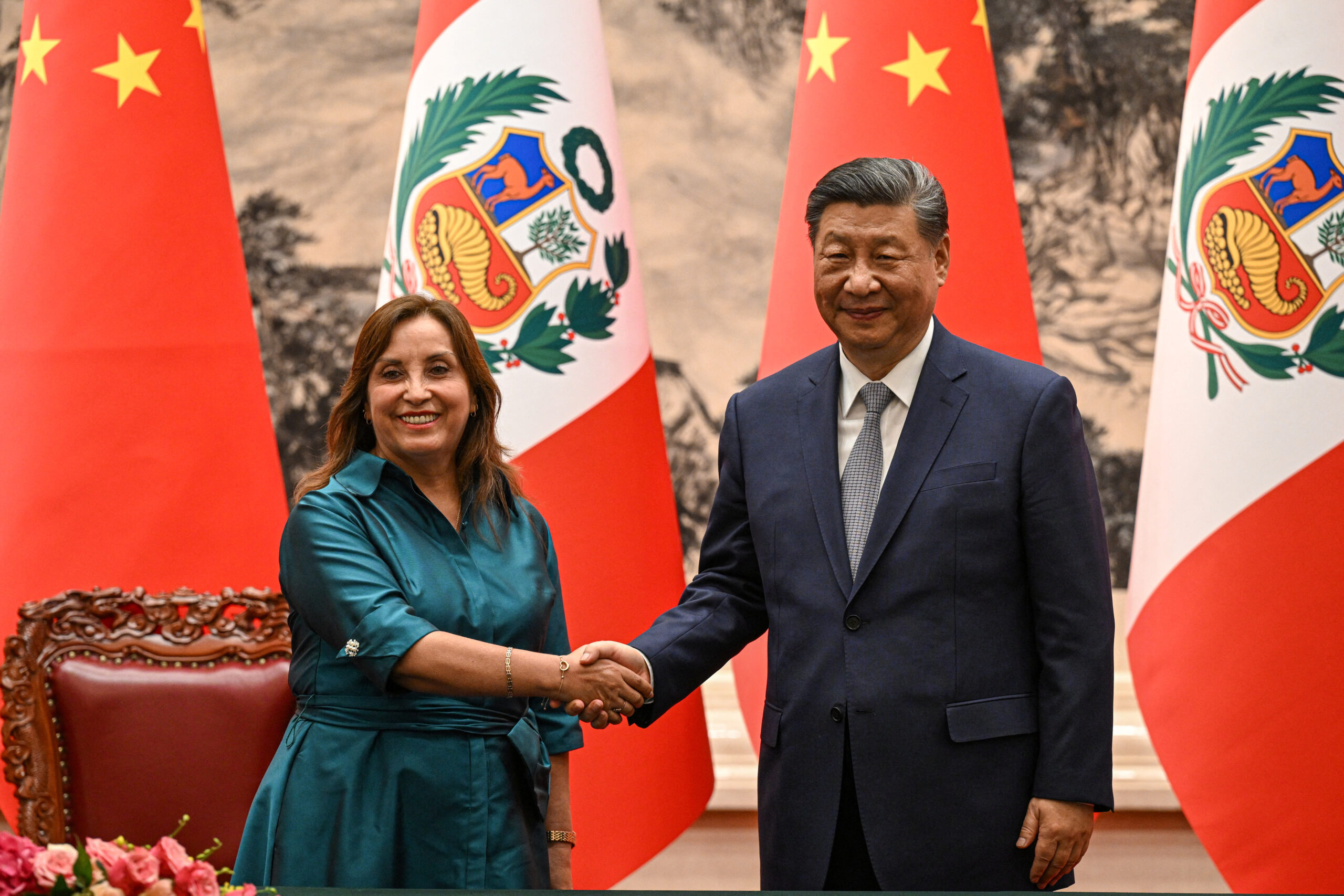
China's President Xi Jinping and Peru's President Dina Boluarte shake hands during a signing ceremony at the Great Hall of the People in Beijing, China June 28, 2024. JADE GAO/Pool via REUTERS Courtesy: Atlantic Council
12 December 2024

Xi Jingping’s Latin Success

Xi Jinping’s visit to South America to attend the APEC and G20 meetings had multiple goals. To inaugurate a new gateway for China in Peru’s Chancay port, sign three dozen cooperation agreements with Brazil, and make nice with the continent’s nations from Chile to the Honduras. Did it succeed in expanding China’s influence in the region? Most certainly, yes.

Chavda Pod Courtesy: Abhijit Chavda Podcast
11 April 2024

West must listen to emerging middle powers

Emerging middle powers like India, Brazil and South Africa are articulating their interests on the global stage with growing assertiveness. Manjeet Kripalani, Executive Director, Gateway House, joins Abhijit Chavda on his eponymous podcast to discuss changing dynamics between the West and the Global South, and how western and emerging middle powers can collaborate on shared priorities like multilateral reform, technology transfer and international trade.

Brazil_podcast Courtesy: Brookings Institution
22 March 2024

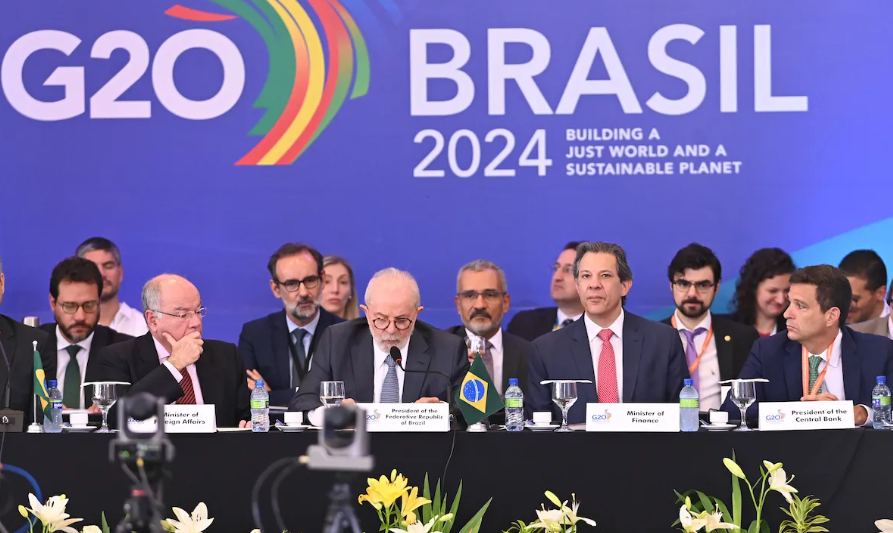
Unfolding Geopolitics | Episode 9, Brazil’s G20 Presidency: on the road

It is three months into Brazil’s G20 presidency, and the country is working hard on its agenda of prioritising energy transitions, reform of global governance and social inclusion. These will flow well into Brazil’s chairing of two other multilateral events in 2025 — BRICS and the COP30. Carlos Frederico de Souza Coelho, Senior Fellow at the BRICS Policy Center, talks about Brazil’s G20 agenda, its intention to advance India’s G20 efforts for global development, and what to expect from his country’s COP30 and BRICS presidencies.

Russian_BRICS_Chairship Courtesy: Official Internet Resources of the President of Russia
4 March 2024

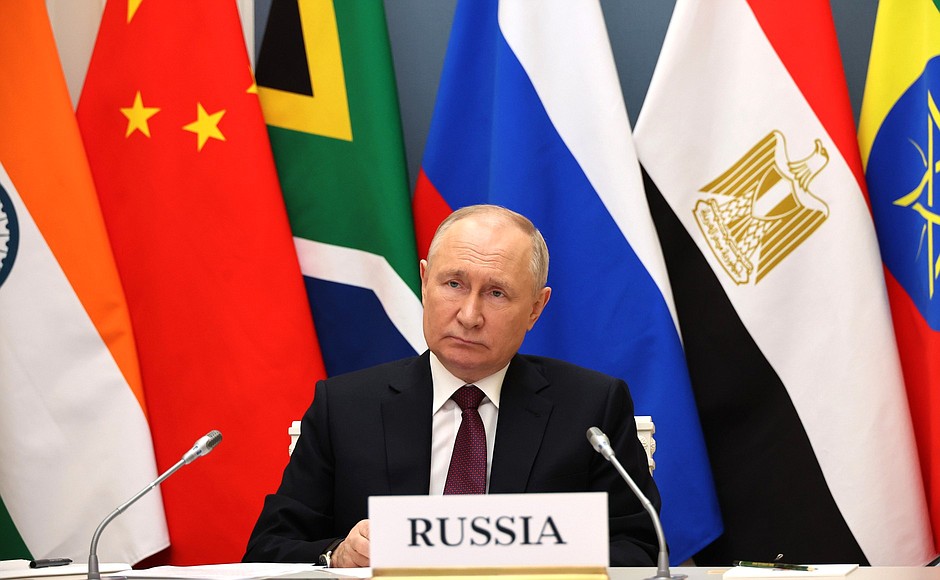
BRICS under Russian chairship

Russia took charge of BRICS in January 2024 at a point of inflection in geopolitics and expanding influence for the bloc. As chair, Moscow aims to bolster cooperation along the lines of the BRICS’ three pillars to shift power away from the West and explore ways to engage potential members. Though China seems onboard, for India, neither of these pursuits must proceed too aggressively.

Screenshot 2023-11-29 at 1.52.17 PM Courtesy: Gateway House
30 November 2023

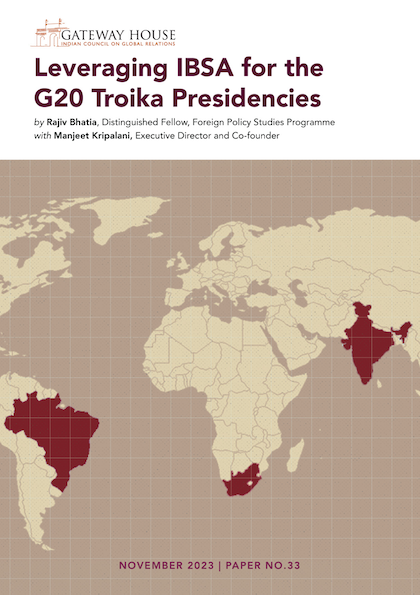
Leveraging IBSA for the G20 Troika Presidencies

On December 1, 2023, India will hand over the G20 Presidency to Brazil. The G20 troika will now comprise the three IBSA countries – India, Brazil, South Africa – till November 2025. This trio has an agenda in common and with the G20, such as multilateral reform, energy transitions and digitalisation. IBSA should use its mechanisms and natural solidarity to advance the interests of the Global South.