
The second round of the India-China Strategic Economic Dialogue will be held in New Delhi on November 26.
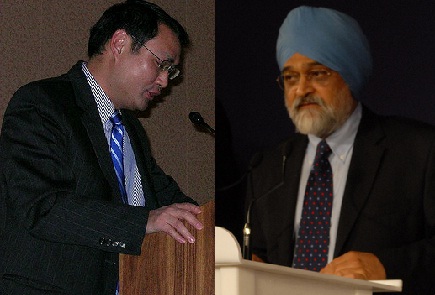
The head of China’s National Development and Reform Commission, Zhang Ping, will be in India to co-chair the event with the Deputy Chairman of India’s Planning Commission, Montek Singh Ahluwalia. Accompanying Ping will be a delegation comprising 200 officials including representatives from the Foreign Ministry and the Ministry of Railways.
The scope of the Strategic Economic Dialogue is expected to extend beyond bilateral trade talks. Working groups on cooperation in railways, infrastructure, energy, environment, and high-tech sectors will meet under the aegis of the Strategic Economic Dialogue.
The spokesperson of the Chinese Foreign Ministry, Hua Chunying, stated that “The two sides will exchange views to seek broader economic cooperation and promote coordination on macroeconomic policy. They will also strengthen cooperation in areas such as investment, infrastructure, high-technology, energy-saving and energy resources.”
India and China are recognized as two significant powers of the ‘Asian Century.’ China is India’s largest trade partner, but the trade deficit between the two is highly in favour of China. While the two-way trade was at $73.9 billion last year, it dipped to $55.6 billion during the past 10 months. Both the countries have expressed an interest to take the figure up to $100 billion by 2015. The trade deficit between the two countries in 2011-12 is pegged at $23 billion.
The initial round of this Dialogue between the two neighbours was held from 26-27 September, 2011 wherein both sides focused on cooperation in railways.
India is escalating its engagement with China. Following the conclusion of this year’s Strategic Economic Dialogue, India’s National Security Advisor, Shiv Shankar Menon, will meet his Chinese counterpart Dai Bingguo, in Beijing, later this month. This is significant, given that the increased frequency in meetings with our neighbour comes shortly after China went through leadership change at its highest echelons.