
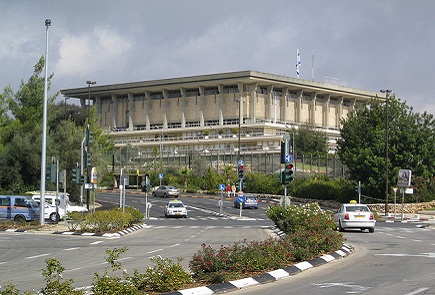
The 19th Parliamentary election to Israel’s unicameral legislature, the Knesset, will take place on January 22. This early election – preponed from the original poll date of October 22 – was called by incumbent Prime Minister Benjamin Netanyahu, following the inability of the current administration’s frayed coalition to pass a budget for the next fiscal year by December 31, 2012.
Among others, the leading contenders include Netanyahu’s Likud Yisrael Beiteinu Party, the Kadima Labor Party, the Shas Party, the Hatnuah Partym and the United Torah Judaism Party. Among the topics of debate doing rounds are Netanyahu’s relationship with the U.S. President Barack Obama over Israel-Iran relations, the stalled status of the Israel-Palestine peace process, the 2011 Israeli social justice protests, and the discriminatory ‘ Tal law’ which grants special exemption to ultra-orthodox Jews from the otherwise mandatory compulsory military service.
Although the citizens complain that the election campaign has been damp, and has not assisted them in choosing the right candidate, the re-election of Benjamin Netanyahu seems imminent. If he does get re-elected for a third term, his primary focus will be towards building a new relationship with the second Obama administration which, unlike the Republican candidate he had bet on, had been frustrated by the Israelis in early efforts at addressing the conflict.
Furthermore, this election comes at a time when India and Israel are preparing for the sixth round of Free Trade Agreement talks. This is significant, given the strong bilateral ties between the two nations in terms of diplomacy and commerce. This is illustrated in the robust $6.16 billion bilateral trade in 2011-12, and cooperation in various areas such as medicine, science and technology, extradition, environment conservation, alternative energy, among others.