
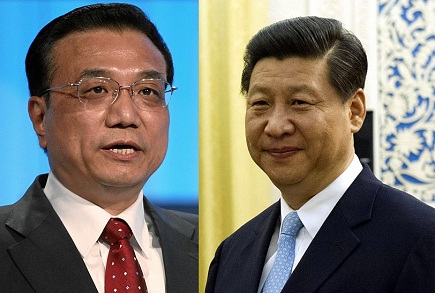
The 18th Party Congress of the People’s Republic of China will be held on November 8. Incumbent leaders Hu Jintao and Wen Jiabao will step down, and Xi Jinping and Li Keqiang will formally take over as the President and Prime Minister respectively.
The Party Congress will also usher in a new Central Military Commission, with seven of the current ten uniformed members retiring as they reach the mandated retirement age of 70 years.
This transition will take place at a time when China is grappling with issues like social inequality, poverty and citizens’ unrest. China’s growing status in the world and the new geopolitical realities require a more modern and sophisticated foreign policy. However, in the face of pressing domestic issues, the new team may struggle to balance foreign policy and strategic demands. Additionally, this change will come at a time when the U.S. would have just gone through a change in its leadership.
The transition of power in China takes place every ten years, and has so peacefully in the past. This year however, with several internal and external problems like the self-immolations in Tibet, unrest in Uighur and the People’s Liberation Army’s aggressive stance against Japan, Philippines, Vietnam and Taiwan over the disputed Senkaku/Diaoyu islands, the new leadership will have a lot on their plate.
In the run-up to the Party Congress, Gateway House published an article, titled ‘China: New leaders, old policy.‘ The author Spike Nowak analyses whether the new leadership will usher in a change in China’s foreign policy.