


An extraordinary exhibition titled “The Light and the Lotus – Relics of the Awakened One” was organised by India’s Ministry of Culture at Rai Pithora Cultural Complex, New Delhi, from January to April this year.[1] It displayed the William Caxton Peppé collection of the Shakyamuni Buddha’s mortal remains of ash and bone and a dazzling cornucopia of precious and semi-precious stones, pearls, gold-and-silver-stamped disc foils, and crystals.
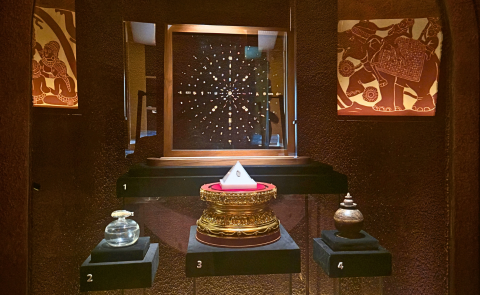
These holy relics were repatriated to their home country, India, after a contentious wrangling between the Indian government and Sotheby’s Hong Kong, which had put them up for auction on 7 May 2025. With the active intervention of the Indian government, Sotheby’s pulled it off the auction at the last minute, resulting in a nail-biting deadlock that was resolved when the Godrej family of Mumbai, led by Pirojsha Adi Godrej, purchased the remains from the Peppé family for the people of India at a staggering sum of Rs 900 crore.
Given its religious and historic importance, it was a worthwhile acquisition for what Buddhists and scholars of Buddhist studies consider priceless: not just because of the belief that the relics belong to the historic Buddha, the founder of Buddhism, but, unusually, that these relics possess a provenance that likely proves this.
This startling discovery was made by the landowner of the Birdpore Estate, William Caxton Peppé, a colonial civil engineer, on whose land the Piprahwa stupa and its adjoining monastic complex stood. One of the five reliquary caskets excavated by Peppé has a Brahmi inscription, which roughly translates to ‘This deposit of the corporeal relics of the Blessed Buddha is (the gift) of the Sukiti brothers, together with their sisters, sons, and wives’ of the Shakyas.’[2]
The Shakyas were the royal clan into which Gautama Buddha was born and whose capital city was Kapilavastu. [3]
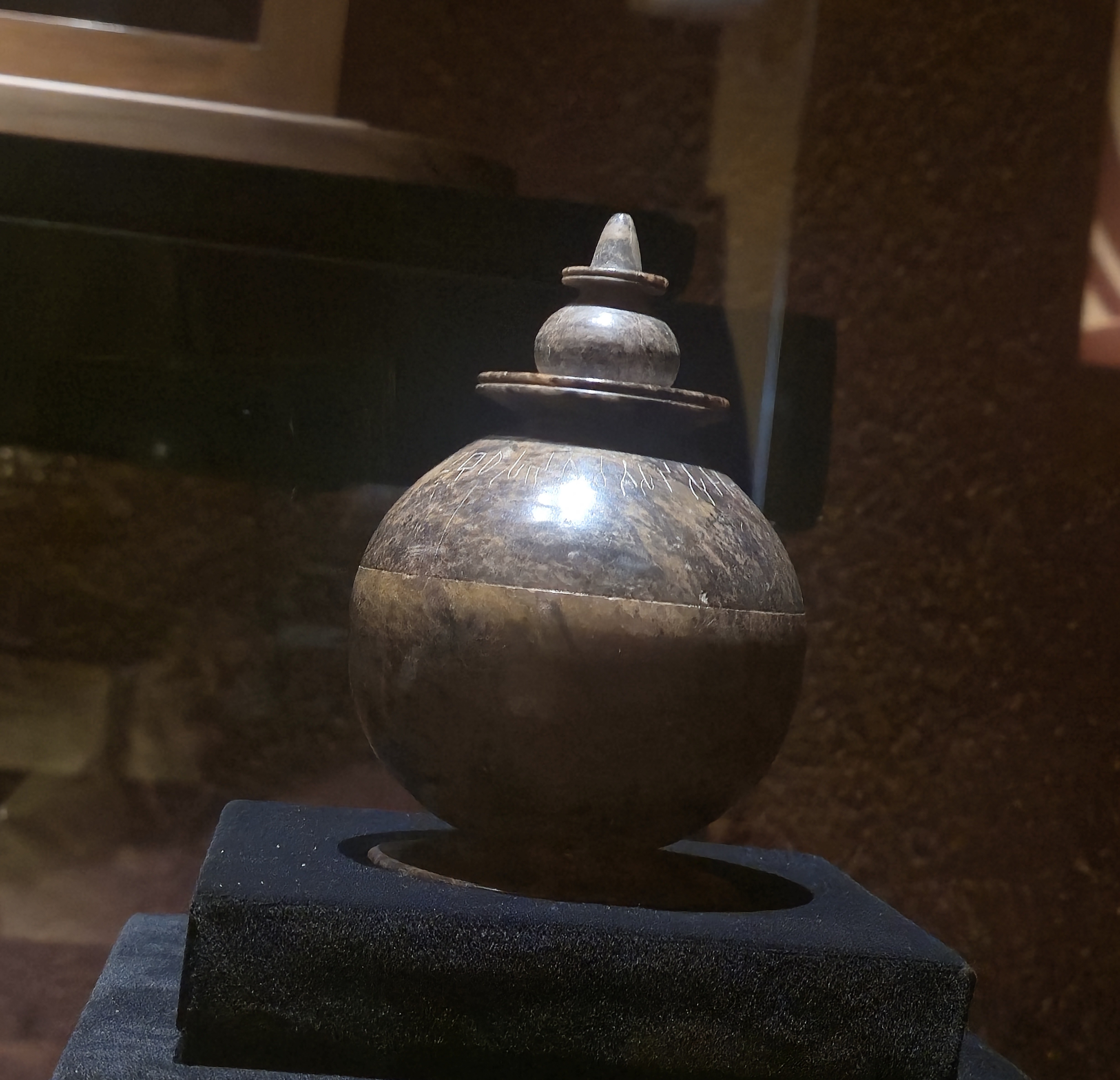
Marg magazine (Volume 77-2) digs deeper into the Exhibition’s narrative, which covered the main events of the Buddha’s life; the history of the first excavation of the Piprahwa Stupa by Peppé in 1898 and the second excavation by K. M. Srivastava of the Archaeological Survey of India (ASI) between 1971 and 1974; and the global distribution of these mortal relics after 1898.
The chapters in this special issue are written by subject experts and are therefore academically rigorous and detailed. Despite this, the average reader will find them easy to read because few technical terms are used, and most authors’ core arguments are developed chronologically. Happily, too, this volume, being an edited one, has standalone chapters, which gives readers the option to pick and choose what they would like to read and in what order.
There are five sections, each broadly falling under a subject or subjects such as history and archaeology and Buddhist religion and culture. Under these five sections are nine chapters that look at the Piprahwa relics from different perspectives. The volume opens with a detailed introduction by the editor, Naman Ahuja. He frames key issues raised by the repatriation of these relics and the “Tensions at the heart of the Piprahwa Stupa”. An important one is whether holy relics are meant to be ritually enshrined or displayed.
In this context, the role of museums is brought up: Can a place for tourism and scientific study also be a place of worship? The tension referred to is caused because, by definition, the relics are bodily remains, not artefacts for display and study. Ahuja astutely navigates this issue by suggesting that museums must expand to synthesise multiple roles. A photograph in this Marg issue of Delhi’s National Museum’s Buddhism wing (gallery eight) reveals a prayer hall, which backs Ahuja’s point that a museum space can also double as a place of worship. This gallery houses a golden casket containing the holy relics from the 1971-1974 excavations at Piprahwa by K.M. Srivastava.[4] [5]
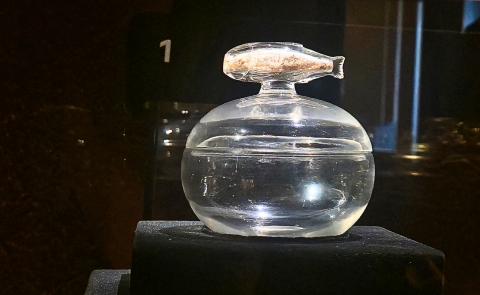
The volume opens with the section, ‘Framing the Piprahwa Relics.’ The only chapter in this section, ‘Beads and Bones: The Case of the Piprahwa Relics’, is by Religious Studies expert John Strong, who traces the journey of the gems from the reliquaries unearthed in the 1898 Peppé excavation in Piprahwa. Of particular interest is the reasoning behind the gems being considered part of the Buddha’s mortal remains, even after being separated from the bones and ashes that were gifted to the King of Siam in 1899.[6] It also explains why pious and wealthy donors made offerings of semi-precious and precious gems, pearls, gold, and silver in auspicious shapes or images as reliquary offerings.
Building on this core chapter, the following four sections examine the Piprahwa relics from both macro and micro perspectives.
In section two, ‘Scientific and Technical Studies’, historian Himanshu Prabha Ray’s chapter ‘The Archaeological Search for the Buddha’s Ashes’ traces the origins of the colonial obsession for locating relics of the historic Buddha, beginning with ASI’s first director, Alexander Cunningham. This chapter elucidates the Buddhist religious and cultural geography of the southern Terai region and the Gangetic plains in which Piprahwa is located. The region is dotted with monastic and stupa sites and possibly with the legendary Kapilavastu, the Shaka capital.
This is followed by an interesting chapter by Ingo Strauch, a professor of Sanskrit and Buddhist studies, on the inscription on the Piprahwa reliquary casket. Strauch’s study of the language, script, and historical context of the reliquary, which he compares to other inscriptions by later Mauryan donors (think Emperor Ashoka). and the popular emergence of Buddhism’s relic culture will be a eureka moment for many readers. The reason being that many would know that it was Emperor Ashoka who sent emissaries overseas, carrying not just the message of the Buddha but also holy Buddha relics to regions like Sri Lanka and Southeast Asia.[7][8]
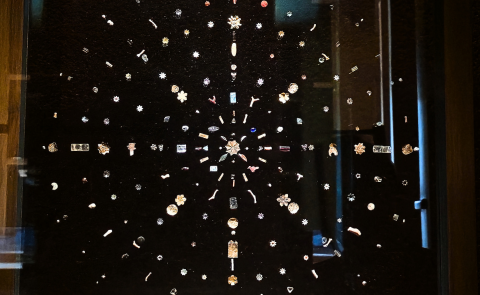
There is a chapter on the Piprahwa beads (precious and semi-precious) in the Peppé cache, the largest share of beads from the Piprahwa relics. Its author, Jack Ogden, an expert on the history of jewellery materials and techniques, categorises them not just by material type but also by their symbolism (shape), like some pearls and semi-precious stones are shaped in the Triratna, the three foundational pillars of the Buddhist faith: The Buddha, Dhamma, and the Sangha (community). Aside from the dazzling array of gems, Ogden tells us that his study of them has, in fact, retroactively dated the Indian subcontinent’s lapidary history. Both Strauch’s and Ogden’s essays are detailed, and their comparative analyses with inscriptions dating to the same archaeological period and with beads uncovered from other stupas, respectively, will appeal only to readers interested in these subjects.
In the third section, ‘Textual and Doctrinal Perspectives Across Regions’, Peter Skilling, an expert on the literary and material history of Buddhism in South and Southeast Asia, gives a fantastic overview of Buddhism’s relic culture in his chapter ‘Bemused by Buddha’s Bones: The Riddle of Relics.’ He tackles the core question any reader would ask regarding the Peppé collection: what value do the pious assign to the Sharira (bone and ash) vis-à-vis the precious and semi-precious gem offerings?
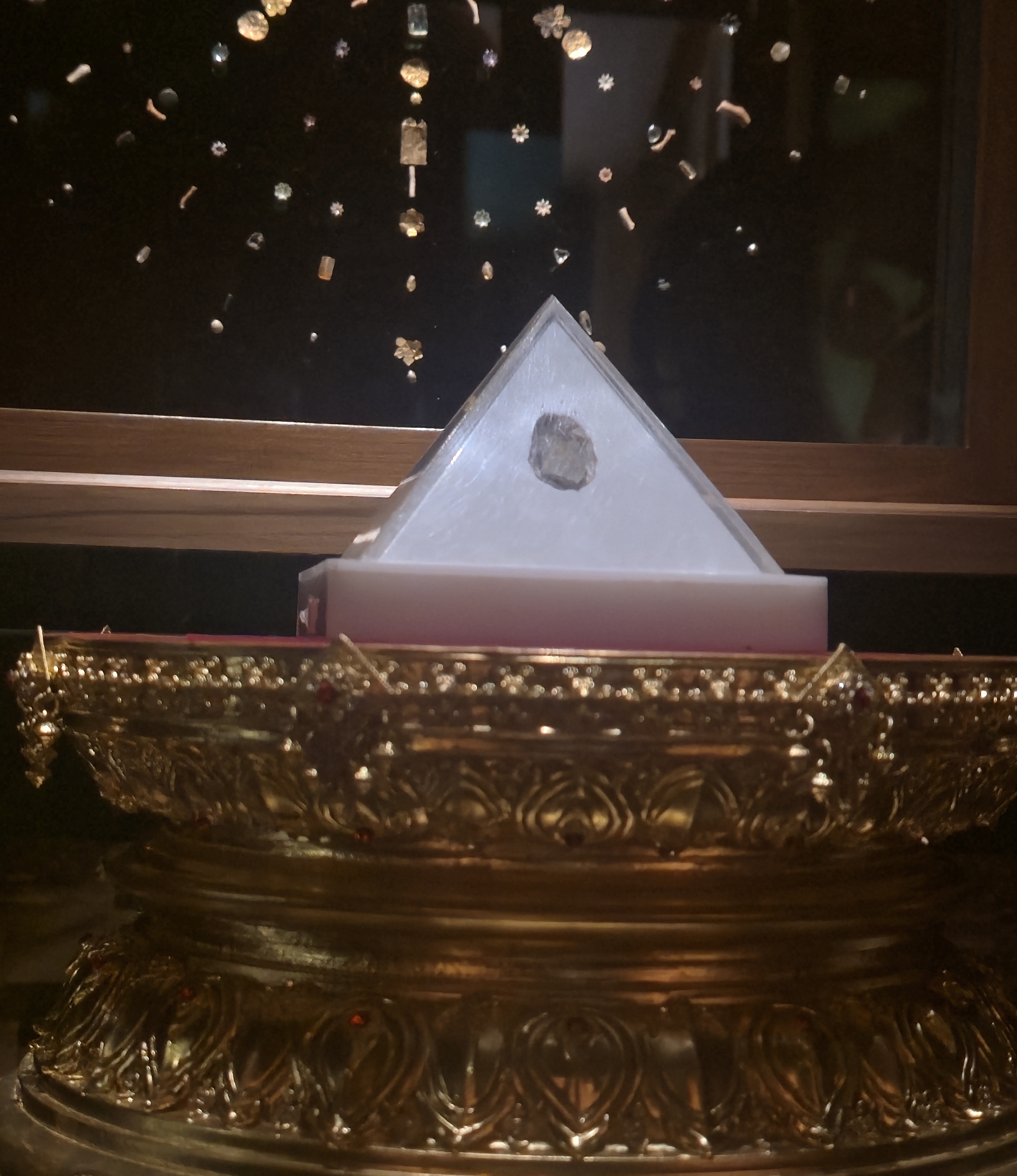
This is particularly relevant to the Peppé collection, as colonial excavators were often untrained archaeologists who valued the beads and precious metals more than the mortal remains. He explains why the Buddha’s Sharira and the semi-precious and precious beads, gold, and silver discs are all considered relics in the context of how a relic culture took root in Buddhism.
The chapter on ‘The Roles of Relics in East Asian Buddhism’ compares relic worship and the miraculous powers attributed to relics of the Buddha and those of his most accomplished and pious Bhikkhus (monks) across regions. This essay ranges across Indian, Chinese, Southeast Asian and East Asian beliefs. It also refers to the Russian province of Kalmykia (98% Buddhist), where a culture of relic worship is deeply rooted. It is pertinent to state here that the Indian government has recently sent the holy relics from the Sanchi Stupa to Mongolia, where they will be given full state honours during their journey to and from Ulaanbaatar. [9]
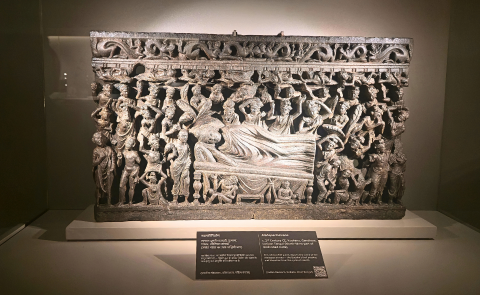
The last section, Contemporary Questions, loops back to some of the questions raised in the Introduction to this volume. It opens with art historian Saloni Mathur’s chapter ‘A Parable of Postcolonial Return’. Here the parable used is the first-ever repatriation of the holy relics of Buddha’s chief disciples Sariputra and Mahamoggallana to India in 1952 from the United Kingdom. She traces the journey of those holy relics excavated from the Sanchi Stupa, which, after excavation, were housed in the Victoria & Albert (V&A) Museum and the British Museum, London. Their journey home began with a 1932 appeal to the V&A, signed by Anagarika Dharmapala under the auspices of the London branch (est. 1926) of the Maha Bodhi Society, founded in 1891, originally headquartered in Sri Lanka, and now headquartered in Kolkata.[10]
These relics eventually returned to newly independent India in 1952 and were entombed in a new vihara built by the Society in Sanchi. The story of the Sanchi relics, narrated chronologically and contextualised in the global geopolitics of its time, echoes the same concerns that arose in the Sotheby’s auction of the Piprahwa relics, viz. holy relics cannot be treated as museum artefacts, and if housed in a museum, protocols are necessary to host them. The difference between Piprahwa and Sanchi is that the former belonged to a private collector, and therefore the public-private partnership between the Indian government and Godrej necessitated a purchase of the Peppé collection.
The ‘tension’ is debated further in the last two chapters in this section. The chapter ‘Next Stop Nirvana and the Piprahwa Relics’ by Johannes Beltz, curator of South and Southeast Asian art, who curated a 2005 exhibition of the Peppé collection at the Museum Rietberg, Zurich, addresses questions he faced when deciding how to display the collection for local European audiences. This is contrasted with the reception the relics received in Siam (Thailand) in 1899, when the ashes and bones with some jewels from the Peppé excavation were gifted that year by the colonial government in India to King Rama V, and their enshrinement in the chaitya of the Golden Mount Temple, Bangkok, is described in the chapter, ‘From Piprahwa to the Golden Mount’.[11]
The Marg volume 77-2, is a tome of knowledge. Some questions, unfortunately, remained unasked, though hinted at, throughout the volume, and the reader will surely have liked to learn the answers. Questions like ‘Is it a simplification to say that Buddhism fled India so completely that no one, including overseas pilgrims, visited these holy stupa sites, resulting in their neglect for centuries?’ What happened in the intervening centuries, broadly from the early mediaeval period to 1898? With the focus solely on the Piprahwa relics and their importance for Buddhists and Buddhist studies, there is no comparison or reference to early Hinduism and Jainism, faiths that coexisted in this ancient period.
Sifra Lentin is Bombay History Fellow at Gateway House.
This article was exclusively written for Gateway House: Indian Council on Global Relations. You can read more exclusive content here.
Support our work here.
For permission to republish, please contact outreach@gatewayhouse.in
©Copyright 2026 Gateway House: Indian Council on Global Relations. All rights reserved. Any unauthorised copying or reproduction is strictly prohibited.
References:
[1] This exhibition was inaugurated by Prime Minister Narendra Modi on 4 January 2026 and ended with the last curator’s walk on 26 April. This author visited the Exhibition on 30 April and was guided by a museum docent. The Holy Relics were travelling the next day on Buddha Purnima – the day it is believed Gautama Buddha was born, attained enlightenment, and died – to Leh, Ladakh, for public display and worship from 1 to 14 May. They are now housed in the National Museum, New Delhi.
[2] William Caxton Peppé was a British colonial landowner and civil engineer who lived on the Birdpore estate, where the Piprahwa stupa is located. By 1898, when Peppe dug a vertical shaft into the stupa from the top, it was already well established that wealthy Buddhist donors deposited precious and semi-precious stones; pearls; stamped images of Triratna, flowers, a lion, an elephant, and a chakra on gold and silver disc foils; and crystals as offerings into the stupas built for the remains of the historic Buddha, who died about 480 BCE, or those who achieved a high level of ‘Buddhahood’ like his most renowned followers, Sariputta and Mahamoggallana, whose relics were discovered in the Sanchi Stupa (Madhya Pradesh).
[3] It was speculated by Archaeologist K.M. Srivastava, based on the clay sealings discovered from the monastic complex adjoining Piprahwa stupa that it was part of the Shaka capital city of Kapilavastu. This theory has not held up because no remains of a city near it have been uncovered.
See Skilling, Peter. ‘Bemused by Buddha’s Bones: The Riddle of Relics’. In Crystal & Ash: The Buddha At Piprahwa Vol. 77 Number 2 (Mumbai, The Marg Foundation, December 2025. pp. 96-98.
[4] This approach was evident at ‘The Light and the Lotus’ exhibition, where the Relics were displayed inside a built hollow stupa with seating around it for those who would like to pray.
[5] The National Museum, New Delhi, has the most sizeable collection of bones (20 fragments) and ash from the Piprahwa Stupa. These were excavated post-independence. The repatriated Peppé collection, now housed in the National Museum, has a few bone fragments but a very large cache of precious and semi-precious stones, pearls, gold, silver, and crystals. The Indian Museum, Kolkata, too possesses a large collection of jewels in addition to the stone coffer and reliquary vases from the 1898 excavation.
[6] The bones and ash from this first excavation were gifted to Siam in 1899, and portions from this were gifted in turn to erstwhile Burma and Ceylon.
[7] Most Indian readers are familiar with the fact that it was the Mauryan Emperor Ashoka who popularised Buddhism in his vast empire and also sent his son and daughter overseas to propagate Buddha’s “Dhamma.” It was an act of piety but also a diplomatic outreach.
[8] The Marg volume is focused only on the Piprahwa relics after the first Peppé excavation in 1898. However, the historic Buddha’s relics were also apportioned earlier.
It is believed that after the Mallas of Kushinagara cremated the Buddha’s body with ceremonies befitting a Universal King (cakravartin), his holy relics, from the funeral pyre, were collected and divided and given by Brahmin priest Dhona of Kushinagar to kings and priests
The eight shares were distributed among Ajatashatru of Magadha, the Licchavis of Vaishali, the Sakyas of Kapilavastu, the Mallas of Kushinagar, the Bullies of Allakappa, the Mallas of Pava, the Koliyas of Ramagrama, and a Brahmana of Vethadipa. The sacred relics were enshrined in eight different stupas. Two more stupas came into existence, one over the urn in which the relics had been collected and the other over the embers. Thus, stupas erected over the bodily relics of Buddha (Saririkastupas) are the earliest surviving Buddhist shrines.
It is stated that Ashoka (circa 272–232 BCE), being an ardent follower of Buddhism, opened up seven of these eight stupas and collected the major portion of the relics for enshrinement within innumerable (84000) stupas built by him in an effort to popularise Buddhism and spread dharma.
See Press Information Bureau of the Government of India’s PDF on the Piprahwa relics. https://static.pib.gov.in/WriteReadData/specificdocs/documents/2024/feb/doc2024220313101.pdf
[9] See Lentin, Sifra, https://www.gatewayhouse.in/wp-content/uploads/2020/11/SCO_Sifra-Lentin.pdf
[10] The Maha Boddhi Society was founded by Anagarika Dharmapala for the revival of buddhism in its holy land, India.
[11] This chapter is by Ampasiri Jumsai Na Ayudhya, from the Thai royal lineage, and Wannaporn Rienjang.