

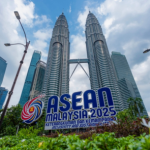
On 27 May, 2025, the 46th Association of Southeast Asian Nations (ASEAN) Summit led by Malaysia in the chair, concluded in Kuala Lumpur. The main outcome, the ASEAN Vision 2045,[1] emphasised regional integration, keeping in mind the theme of “inclusion and sustainability” against the backdrop of intensifying Sino-U.S. geostrategic rivalry and trade protectionism. ASEAN has several ongoing challenges, which the leadership in Kuala Lumpur has failed to address. Is the stated deliverable merely a diversion from Malaysia’s weakening leadership in the region?
If so, it would be a great pity. Malaysia is one of the founding members of the ASEAN, and is fully cognisant of its prolonged challenges, particularly in resolving the civil war in Myanmar, and member-states’ territorial disputes with China in the South China Sea. Expectations from Malaysia’s fifth chairmanship were particularly high[2] given its enforceable recommendations to address these issues over the years.
Consensus and non-interference are cardinal principles of the ASEAN. In 2021, member states unanimously agreed upon the implementation of the 5 Point Consensus (5PC) to address civil war in post-coup Myanmar. Malaysia now joins four successive ASEAN chairs which have failed to implement it, even as Myanmar’s military junta has successfully sidestepped a regional solution by having multiple parallel bilateral engagements.
Similarly, mainland and maritime ASEAN members have differing interests in the territorial contestations with China in the South China Sea. The collective urge to implement a Code of Conduct, therefore, remains an elusive goal. Indonesia, ASEAN’s largest economy, has traditionally hedged between China and the U.S. but is now leaning towards non-Western institutions like BRICS, reflecting the region’s fragmented consensus-based decision making.
While China remains ASEAN’s largest trading partner, the U.S. is ASEAN’s largest source of foreign direct investment and is seeing a diminished regional presence. The second Trump Presidency’s “Liberation Day” tariffs compound the region’s challenges and was part of the summit’s agenda – but was not addressed.
ASEAN’s inability to reach a resolution perhaps mirrors Malaysia’s own deadlocked parliament in 2022. Prime Minister Anwar Ibrahim, who took the ASEAN chairmanship amidst great hope, seems to have curbed his ambitions, and slipped into applying his domestic policy approach to ASEAN. His Malaysia MADANI vision which includes kemampanan (sustainability), kesejahteraan (prosperity), daya cipta (innovation), hormat (respect), keyakinan (trust), and ihsan (compassion), has become ASEAN’s inclusivity and sustainability promise – which the grouping’s challenges have long outgrown. The outcome was an expedited ASEAN membership for Timor Leste and the legitimisation of Myanmar’s military junta as the principal facilitator of relief distributions following Myanmar’s recent earthquake [3] – both developments reinforcing the 46th summit theme.
Malaysia’s mid-year summit priorities also reflected its dependency on China, which accounts for 16.8% of Malaysia’s total global trade, a figure that has grown significantly over the past 15 years. The timing of President Xi Jinping’s state visit to Kuala Lumpur on April 17, 2025[4]—merely six weeks before the summit— had been widely interpreted as China’s attempt to shape the regional dialogue and influence the summit.
Internally, Malaysia has domestic political and economic challenges, particularly Ibrahim’s inability to deliver on his promised reforms. These include curtailing corruption and strengthening the country’s economy.[5]
It needn’t be this way. There are six months left for Malaysia as ASEAN chair. There are three immediate challenges: Myanmar’s future, the Philippines’s territorial concerns in the South China Sea, and the impact of U.S. additional tariffs. In Myanmar, Malaysia can implement the 5PC mechanisms by establishing an ASEAN-mediated dialogue between key stakeholders – Myanmar’s junta and the exiled National Unity Government. Additionally, it can secure the release of political prisoners and establish independent monitoring provisions for Myanmar’s upcoming elections. It can also lead as the region’s unified voice in advocating for sanctions relief to support Myanmar’s recovery. On the South China Sea, Malaysia can advance the Code of Conduct to facilitate a free and open maritime region; it can engage the East Asian Summit [6] members to drive implementation of these principles.
Concerning U.S. tariffs, Malaysia can employ hedging U.S. and Western engagement to become a key counterweight to China’s overwhelming economic footprint. ASEAN’s combined economy ranks as the fifth largest globally, with a collective GDP of $3.6 trillion and economic growth averaging 5% annually. It is essential for the member states to work as a bloc to retain ASEAN centrality, autonomy and agency. While the 46th summit served as a mid-year review, the upcoming East Asian Summit later this year, can provide another forum where Malaysia can champion ASEAN centrality and engage dialogue partners.
Malaysia’s ASEAN chairmanship will be determined by its capacity to balance “inclusivity and sustainability” with practical problem-solving. It can do so by pivoting towards more incremental changes in navigating complex geopolitical realities while maintaining ASEAN unity and relevance.
Dr. Dipannita Maria Bagh is a Senior Researcher, Southeast Asia Studies Programme.
This article was exclusively written for Gateway House: Indian Council on Global Relations. You can read more exclusive content here.
For permission to republish, please contact outreach@gatewayhouse.in
©Copyright 2025 Gateway House: Indian Council on Global Relations. All rights reserved. Any unauthorised copying or reproduction is strictly prohibited.
References:
[1] ASEAN, “ASEAN 2045: Our Shared Future,” https://asean.org/wp-content/uploads/2025/05/ASEAN-2045-Our-Shared-Future.pdf.
[2] Amb. Gurjit Singh, “High expectations of Malaysia as ASEAN chair,” February 13, 2025, https://www.gatewayhouse.in/high-expectations-of-malaysia-as-asean-chair/#.
[3] Dipannita Maria Bagh, “Myanmar’s multiple stakeholders for aid,” April 3, 2025, https://www.gatewayhouse.in/myanmars-multiple-stakeholders-for-aid/.
[4] Ministry of Foreign Affairs, Malaysia, “State visit by the President of the People’s Republic of China to Malaysia, 15-17 April, 2025,” April 14, 2025, https://www.kln.gov.my/web/guest/-/state-visit-by-the-president-of-the-people-s-republic-of-china-to-malaysia-15-17-april-2025.
[5] Sophie Lemiere, “The Death of Reformasi: Anwar Ibrahim, UMNO, and the Betrayal of a Movement,” November 1, 2024, https://www.csis.org/analysis/death-reformasi-anwar-ibrahim-umno-and-betrayal-movement
[6] 10 members of the ASEAN and their 8 dialogue partners—Australia, China, India, Japan, New Zealand, South Korea, Russia, and the United States.