

Prime Minister Narendra Modi’s two-day visit to Ethiopia (December 16-17), as part of a three-nation tour, has significantly strengthened India’s relations with two important regions – West Asia and East Africa, which are interrelated. The decision by the prime ministers of India and Ethiopia to elevate bilateral ties to a strategic partnership reflected their shared assessment that the current geopolitical turmoil requires the two nations to collaborate closely for a larger purpose.
For India, Ethiopia’s importance as a key African country that has played a vital role in advancing the vision of African unity and integration, and as a nation that killed its own demons of dictatorship to emerge as a successful democracy, is quite apparent. Even better, Ethiopia has overcome its internal political challenges to become one of the fastest-growing economies on the continent. The capital, Addis Ababa, meaning ‘the new flower’, is considered Africa’s diplomatic capital.
For Ethiopia, India is clearly an emerging global power, with an enviable record of economic development through democracy, a country located strategically at the centre of the Indian Ocean, one that can assist its partners in Africa with its economic heft, technological prowess, and supportive role in the domain of security and military cooperation.
This fundamental convergence has been expanding through the mutual respect, even affection, that the two prime ministers – Narendra Modi and Dr Abiy Ahmed Ali – have for each other, fuelled by frequent meetings and long conversations about the state of Asia, Africa, and the world. The special kind of welcome accorded to the Indian PM confirms this. PM Abiy welcomed Modi at the airport and personally drove him to his destination. The conferment of Ethiopia’s highest honour on Modi and the invitation to address the joint session of parliament confirmed the perception that the two nations had opened a new pathway to a qualitatively deeper partnership. Modi aptly spoke of “a new energy, a new speed, and a new depth” in India-Ethiopia relations.
What exactly are the areas that the two governments are likely to focus on in the future? A key impulse, no doubt, is to diversify trade, identify investment opportunities in infrastructure, IT, mining, and agriculture, and enhance connectivity. Bilateral trade, currently at about half a billion dollars, shows strong potential for growth if both sides fulfil their commitments to expand it. Over 675 Indian companies are registered in Ethiopia, and have invested over $6.5 billion in sectors like textiles, manufacturing and pharmaceuticals, creating over 75,000 jobs.[1]
Another area is the deepening of educational linkages that have yielded rich dividends in the past. The focus now is on scaling skill development and training opportunities for Ethiopian youth in specialised Indian institutions through ICCR-supported ITEC and other schemes, to deliver measurable results in the short to medium term. Here, technology, especially artificial intelligence-related courses, is sure to play a significant role.
In his well-crafted speech before the Ethiopian parliament, PM Modi highlighted health security, food security, sustainable agriculture, and green energy. Cooperation on climate action will deepen through innovative initiatives, such as the establishment of the Solar Tech Application Response Centre (STARC) at Addis Ababa University. He framed India-Ethiopia cooperation within the broader context of South-South cooperation, stressing that the Global South was writing its own destiny and that India and Ethiopia shared a vision for it. “Our vision is of a world where the Global South rises – not against anyone, but for everyone,” he added.
The signing of several agreements, including cooperation in customs matters, debt restructuring under the G20 common framework, doubling of ICCR scholarships, and training for UN peacekeeping operations, marked Modi’s visit. Another step of considerable importance, which demonstrated the host nation’s growing trust in Indian capabilities, was the decision to establish a data centre at the Ethiopian Ministry of Foreign Affairs with Indian assistance. The two sides hope to deepen cooperation through specialised institutions, including the International Big Cat Alliance (IBCA) and the Coalition for Disaster Resilient Infrastructure (CDRI), in which India has played a pivotal role.
However, discussions in Addis Ababa extended beyond bilateral issues to include global politics, Africa’s challenges, and other regional matters. India and Ethiopia have been aligned in supporting multilateralism, UN reform, and countering terrorism in all its forms.
Ethiopia’s entry into BRICS adds a significant dimension. Ethiopia seemed an improbable candidate for this grouping. But then PM Abiy flew to Johannesburg to attend the BRICS summit in August 2023 and began high-octane lobbying with the leaders of the five founding nations. In this last-minute effort, he received proactive support from South Africa’s President Cyril Ramaphosa. India was won over, and soon the rest followed suit. Consequently, Ethiopia can now advance its interests and those of Africa in the expanded forum. Besides, Ethiopia and India have been cooperating closely as fellow travellers and supporters of the common interests of the Global South. The Ethiopian PM was an enthusiastic participant in two of the Voice of Global South summits hosted by India.
Before the Modi visit, there was some hope that Addis Ababa, home to the African Union (AU) headquarters, might play a helpful role in advancing India-AU discussions on an early scheduling of the fourth India-Africa Forum Summit. The issue was no doubt discussed between the two PMs, but no reports appeared to indicate whether the Indian side had touched base with the Chairperson of the AU Commission during the PM Modi’s visit. The press release of the Ministry of External Affairs dated December 16 said only that PM Modi “noted that India looked forward to working with Ethiopia as BRICS partners under its presidency and for the proposed India-Africa Forum Summit.” Whether that summit, already unduly delayed since 2015 when the third summit was held in New Delhi, will actually take place in 2026 depends entirely on the interest and enthusiasm of the African side.
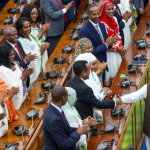
Unlike other partners of Ethiopia, some of whom have been domineering in their approach, India is committed to the principles of equality and mutual respect. PM Modi concluded his speech before the parliament with these words: “I give you my word that we will work together as equals. We will build together as partners. And we will succeed together as friends.” The MPs rose spontaneously to give a standing ovation to their distinguished visitor. Seen from this lens, the future of India-Ethiopia relations has never looked brighter.
Rajiv Bhatia is the Distinguished Fellow for Foreign Policy Studies and a former ambassador.
This article was exclusively written for Gateway House: Indian Council on Global Relations. You can read more exclusive content here.
Support our work here.
For permission to republish, please contact outreach@gatewayhouse.in
©Copyright 2025 Gateway House: Indian Council on Global Relations. All rights reserved. Any unauthorised copying or reproduction is strictly prohibited.
References:
[1] Press Information Bureau, “India’s Engagements with Ethiopia,” December 17, 2025, https://www.pib.gov.in/PressReleasePage.aspx?PRID=2205431®=3&lang=2