 Courtesy: Victoria and Albert Museum, London.
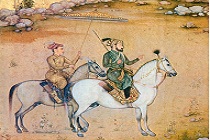
The story of Darah Shikoh, heir-apparent to the Mughal throne in the mid-17th century , enacted by the National Theatre in London, offers insights on how to get beyond the increasingly polarising global discourse on faith, reason and Islam
 Courtesy: rediff.com
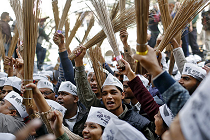
There is an emerging consensus among scholars and political analysts across the world that the 20th century advances in building democratic systems have run their course. It is in this context that AAP’s rapid rise to power might serve as a light-house of global significance—a beacon that guides others seeking to take democracy to a higher level and warns of treacherous rocks
 Courtesy: Charlie Hebdo
2015 has begun on a sombre note as France suffered the worst terror attack in the country's history, and India saw protests by right-wing conservative groups against the screening of the film-PK. Both instances show an increasing intolerance against the questioning of established religions
 Courtesy: khabrsoutheastasia
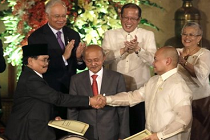
The Islamic State’s violence dominated 2014’s news headlines, masking important non-violent initiatives around the world. But endeavors for peaceful solutions are thriving, and India, with its legacy of a non-violent freedom struggle, must contribute to this process as a counter-force against the advocates of violence
 Courtesy: UN Climate Conference
With the weaker-than-expected agreement at the recent Climate Change Conference at Lima, there is an urgent need to replicate innovative green endeavours in civil society and business for a sustainable global economy with grassroots empowerment
Rajni Bakshi, Gandhi Peace Fellow, Gateway House, sits down with Milan Vaishnav, Associate, South Asia Program, Carnegie Endowment for International Peace, to discuss how U.S.-India relations have progressed since PM Modi took office and what to expect during President Obama's visit to India as the chief guest for Republic Day.
 Courtesy:
The agreement signed at the Climate Change conference at Lima should be a triumph of diplomacy but the reality is quite the opposite. Although the agreement means there is now global unanimity on the need for climate action, the text in the agreement falls short on nearly every indicator
The People's SAARC (PSAARC) declaration,which called for the governments to address a number of issues from food security to climate justice, established the network as advocates for a progressive humanitarian agenda
 Courtesy: Luca Frediani/Wikimedia Commons
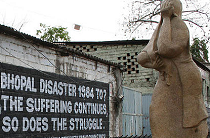
A tragic ‘anniversary’ this week drew attention to what it would take to ensure that the current excitement about ‘make in India’ becomes a boon and not a curse
 Courtesy: PSAARC
Parallel to the official SAARC meeting was the People's SAARC in Kathmandu. Comprising NGOs, civil society leaders, and activists, the PSAARC is a platform that rejects narrow nationalism and religion in favour of a transcendent South Asian identity