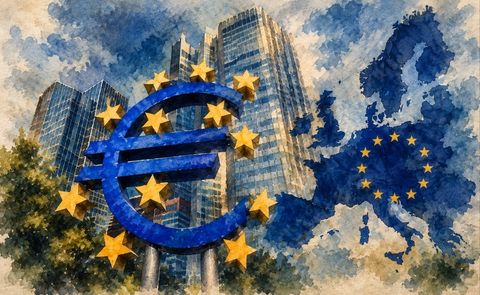
Europe needs to set aside talk of populism because it becomes an obstacle in evaluating what’s at stake. For Europe’s competitiveness in the world, it requires states that are fashioned or refashioned as sovereign states in individual countries as economic actors. A big problem these states will be facing is the unemployment issue, with technological transformation displacing large numbers of jobs in industry and the service sector. In the case of Europe, this would also mean a loss of its status as the prime market for goods, a destination for global connections.
Manjeet Kripalani (MK): Good afternoon, we are very pleased to have Dr Huricihan Islamoglu, who is Professor of Economic History at Bogaziçi University, Istanbul. Dr. Islamoglu has studied and taught on both sides of the Atlantic and has been analysing the European and Atlantic project for decades.
Dr Islamoglu was also a Gateway House visiting fellow during 2016 – an interesting time in Turkey’s security when there was an attempted coup against President Erdogan and a moment in India’s political and economic journey when the country conducted the experiment with demonetisation.
MK: The world is going through so much turmoil, and maybe when you came 10 years ago, that was the beginning of the change that manifested itself and is now visible as a full-blown transformation. The year 2016 was the hinge year in world affairs, when Donald Trump was elected President of the U.S. and when the accepted politics, economics, and security scenario began to change.
MK: The dramatic transformation that is playing out before us is that of the Europe project, which is on fire. What is your view? Is it happening in Europe, and what will be its likely fate?
In the Americas – North and South – how do you see their political trajectory, and what can we expect from the dramatic shifts taking place? Finally, there is Eurasia, which is shaping up as the new centre of connectivity for trade, energy, and human services. How is that formation being cast?
Huricihan Islamoglu (HI): Europe started as a market project. It was essentially an American project. In the post-World War period, America needed an outlet for its surplus consumer goods.
The American economy, during the war, was geared towards the production of weapons. When the war ended, the high productive capacity of the industry was diverted to the production of consumer goods, resulting in overproduction. Europe was the most appropriate channel for the surplus, really, with compatible human capital and compatible tastes and values.
American corporations also favoured Europe as a venue for investments. Contrary to the common understanding that American corporations preferred underdeveloped markets, in reality, during the post-war period, they really preferred Europe with its skilled labour and common cultural premises. Therefore, Europe had to be constructed as a market project, as a single market.
The Marshall Plan was important in this as it provided funds for Europe’s economic recovery. And Europe started to come back. Especially in Germany, industries destroyed by the war started to come back. The 1951 European Coal and Steel Community declared the common market for the two inputs essential for industrial development.
Germany in the seventies and eighties was developing into a major industrial power. The Bretton Woods agreement, signed in 1944, enabled fixed exchange rates and pegged the dollar to gold.[1] It also provided the financial infrastructure for America’s trade with Europe in consumer goods and for investments by American corporations.
It should be remembered that the post-war era until the end of the USSR in 1989 was also the period of the Cold War. The fact that Germany, following its defeat in the Second World War, was not allowed to build an army meant that its security was underwritten by the U.S., a factor that contributed to the exclusive channelling of incoming funds toward economic development. In this period, Germany was also building its welfare state with high levels of social spending (in competition with socialist East Germany), sustained by high taxation levels, a development which has now become a liability when the economy is contracting.
This happy state of affairs in the post-war period was disrupted. The financial infrastructure provided by Bretton Woods collapsed in 1971, when President Nixon went off the gold standard. The American economy began to go into debt in the seventies. The Great Society projects of President Lyndon Johnson, the Vietnam War, etc., took a toll, and America could no longer have a stable dollar. At that time, U.S. President Richard Nixon’s Treasury Secretary John Connely said to his European counterparts at the G-10 meeting in Rome in 1971, “The dollar is our currency, but it’s your problem.”
So, it became a European problem. Subsequently, it became a world problem.
Today, we’re facing that issue. The dominant economy in the world is no longer a surplus economy; it is heavily in debt. The American dollar as a universal currency is no longer a stable means of exchange in the global economy. For Europe, a stable currency was a precondition for the post-war trading environment among different countries as well as for trade with the U.S.
This was the eighties and nineties. Led by big corporations, the global economy grew, and Europe affected its own unification in 1993 following the adoption of a single currency at Maastricht. Instead of relying on the financial architecture provided by Bretton Woods, Europe, now the European Union, had a single currency, which stabilised exchange relations among its different states.
Now, this European financial architecture proved to be problematic in a number of ways. But how problematic was not visible when the global economy was growing in the nineties.
Between 1997 and 2007, until the financial crisis, was the golden age of Europe. This was the peak of European industrial development, especially in Germany. German cars, small and economical, were on American highways until that dominance was first challenged by the Japanese and subsequently by the production of smaller American cars. Nevertheless, this period was really a golden age for Europe until the financial crisis of 2007-08.
That crisis led to the questioning of the financial architecture introduced by the Maastricht Treaty. It also needs to be underlined that this was a crisis of the developed world, of developed economies, the sort where the Global South was not really affected, or only indirectly affected, by suffering its aftershocks.
With the crisis, the unsustainability of the financial architecture provided by Maastricht became evident. This is how it worked. Under the Maastricht Treaty, there was a separation of monetary policy from the fiscal policies of individual states.
Monetary policy became the domain of the European Central Bank (ECB). Fiscality, of course, is the domain of individual states. But this separation literally crippled the states because states could no longer control their money.
When, for instance, Britain left the union, the primary argument was, We want to control our money. What does it mean, controlling the money? For instance, if there are high levels of debt, as European countries have now, they want to increase their exports. In order to increase exports, they have to devalue their currency so cheaper goods can find customers in the global markets. But under the Maastricht architecture, it is not possible to do this because European countries have no control over their money.
Their money is controlled by the ECB and through networks of global central banks. I remember at one point in Turkey, talking to central bankers, I was told that they saw more people from other central banks than they did their own bureaucrats in Turkey. So, there was a camaraderie, so to speak, among the central bankers worldwide.
This was true not only for Europe but throughout the world through the adoption of the Washington Consensus or, simply, market reform packages introduced by the IMF and the World Bank. The issue was policy packages of trade liberalisation and privatisation worldwide. The single currency in Europe, made possible by Maastricht, and the global network of autonomous central banks were part of the liberation of money – removing it from the domination of individual states and making it part of the economy or joining it with the world of commodities. Following the financial crisis and a decade later, in 2020, the COVID crisis, states in developed Western economies went further into debt, and the financial architecture of Maastricht and that of the global economy under the domination of the U.S. were questioned. This was happening in a context of slow economic growth and escalating societal unrest.
Such questioning was due to institutional fault lines in Western economies as much as to developments in the global economy at large, especially to unprecedented growth rates elsewhere, most notably in China and India. Often leading to the use of multiple currencies in global trade.
Back to the present state of affairs, actors in the global economy, states, and corporations are looking for institutional solutions to ease financial transactions beyond those provided by the Washington Consensus and the EU. In this context, as individual states are taking charge of their trade policy and fashioning industrial policy that is in tune with trade policy, they are willing to try out multiple currencies, including their domestic currencies as well as new currencies in global trade, often bypassing the dollar.
Because as much as the American economy has been in debt, the dollar continued to be the dominant means of exchange and was weaponised in the struggle to maintain its dominance in different parts of the world, as was the case in Afghanistan, where the U.S. withheld the country’s dollar reserves in the U.S. banks at a time when the country was in the grip of a famine following the Taliban takeover in 2021.[2] Similarly, the U.S. refuses to let go of Russian dollar reserves as punishment for the Russian invasion of Crimea. These actions did not stop individual countries from conducting their trade in alternative currencies, as we know, and from competition from the Chinese yuan.
MK: What role did China play in contributing to this? Because it has hastened this moment, especially where the European project is struggling.
HI: When the Western developed economies were struggling with these issues, we had the unprecedented growth of the Chinese economy. Simply put, European economies are unable to compete with China in global markets. The reason, according to some economists, is that European industries and corporation, during its golden age between 1997 and 2007, did not really invest in innovations, in innovating their production systems, or in the development of new products.
The corporate profits of European companies were largely channelled into Wall Street, London, into the stock market, and into financial markets. This is especially true in the case of the German automotive sector, which in the nineties and in the 2000s turned to cheap labour markets in China and invested there for the production of parts.
This was the period of boom for the German industry. On the Chinese side, this was a time of building capacity, absorbing the know-how of European enterprises, and enjoying government subsidies. Afterwards, Chinese exports came into the global markets, threatening European exports. There is a new model of Asian industrial development, subsequently formalised by the Korean economist Keun Lee of Seoul National University. The model presupposed an initial period of exposure to the global market at the lowest level of value chains, to be followed by a period of withdrawal and consolidation of the learning acquired in the first phase, as well as of infusion of government assistance. In the third phase, the enterprise has acquired innovative production capacity to make it competitive in global markets.
And when we look at the Chinese economy and its actors, we shouldn’t just look at the major corporations and the state-owned and private companies but also at the millions and millions of small enterprises which are linked to the big corporations, constituting extensive and highly complex networks of production. These smaller enterprises, individually or jointly, could also venture into global trade, especially investing in regional or domestic trade. It was very difficult, really, for Europe, as well as for America, to compete with Chinese networks of production, both linked to big corporate bodies or acting independently of them.
The absence of an extensive and competitive production network is one factor which largely figures in the inability of European economies to compete in global markets.
Returning to the institutional fault lines of Europe, rather than the EU, we identify two such fault lines: one is about the institutional separation of monetary policy from state fiscal policy, which we already talked about; it led to crippling states not intervening in the economy to increase their export competitiveness in the face of Chinese competition. Such a separation prevented individual states from developing an industrial policy – which is becoming a major concern in individual countries if they are to compete in the global economy.
This focus on industrial policy is a departure from the globalisation era of the eighties and nineties, until 2007, when trade policy and global integration through trade were priorities. It assumed production to be the prerogative of developed Western economies and the rest of the world was to be integrated into the Western production centres, providing those centres with markets for their manufactured goods and for their capital investments, and supplying Western industries with cheap labour as well as with food and raw materials. Indeed, there was a flavour of the Western empires of the late 19th century!
Globalisation had the unintended consequence of a diffusion of industrial capacity, with industrial economies from the North and South competing in the global markets.
When we are talking about the current crisis of Europe, we are talking about the state of the European economy in the post-globalisation context of the global economy. This is a context in which industrial policy, and the ability of individual economies to compete in global export markets, are defining features, and states are, in this new context, in the process of transforming (albeit painfully) into actors – both political and economic- in support of industrial, export-oriented economies.
MK: What are the other fault lines in today’s Europe?
HI: The second fault line is the democracy deficit, the lack of representation on the part of societal actors (especially those other than global corporate actors and their domestic linkages) in the decision-making processes.
EU governance, as well as the governance of the global economy within the framework of the Washington Consensus, primarily relied on experts or non-elected officials. This was ruled by non-representative experts, such as the European Commission, which is a body of experts. The European Parliament is not a decision-making body but a consultative institution. Instead, what people or different groups, workers, peasants, and students want is to have a say, really, in the making of rules, which determine the conditions of their social and economic existence.
The issue is the social unaccountability of the expert bodies which make up the EU governance. Existing rules of the Union, a prime example being the Common Agricultural Policy, largely address the concerns of big corporations, agribusiness, and marginalising small producers. The Common Agricultural Policy absorbs nearly half of the EU budget, with the biggest share of subsidies going to big agricultural corporations.
There is also the issue of law and its unaccountability. Decisions of the European Court of Justice (ECJ) are binding in the individual societies that make up the Union, and these decisions have priority (principle of primacy or principle of supremacy) over national laws of individual states or the decisions of national courts or judges with respect to cases where the law of the Union coincides with the national law. This is true in the case of human rights laws. That is, EU law takes precedence over national law, including legislation and national constitutions. The tension between the EU and national laws is demonstrated in the ongoing crisis in Poland triggered by the attempt of the prime minister (representing the EU camp) to remove from the Constitutional Tribunal two judges defending the sovereignty of national law.
So, there’s the governance issue (referring to both the regulations of the Commission and the decisions of the ECJ) and the deficiency of representation in both institutions — a democratic deficiency — which translates into inequalities in income and wealth within the eurozone, with EU elites facing populations in individual states which are excluded from the enchanted sphere of the EU and for whom the states in debt and/or paralysed otherwise can do little.
These fault lines were first revealed following the financial crisis of 2007-08 and the COVID crisis, leading to the debt crisis of individual states and an EU economy unable to compete in the global economy. Neither the EU nor the individual states are able to effect any change, as EU governance separates the economy from the political will of individual societies; the individual states, although they may possess the political will, are shut off from the economy to respond to the demands of different social groups.
The daily problems of European governance stare at us from TV screens and on the streets in the cities: in France now and elsewhere in Italy, Germany, and the protests on the streets by different groups – farmers, students, workers. There is overall dissatisfaction; there is unemployment resulting from factory closures due to inability to compete in export markets as well as from technological transformation; there’s the question of insufficient government funding in secondary and higher education; reaction to immigration from the Global South. Immigrants are viewed as competition for state funding in social services, and in the labour markets as pulling wages down. Government debt in major European states (except for Germany) has skyrocketed, with consequences for inflation. Total government debt for the entire Euro region has reached 88.7% of GDP.
Extreme right parties in individual countries are gaining ground and moving to the centre: they demand distancing from the EU; express dissatisfaction with big corporations; advocate an end to government spending, to immigration, for lower gas prices, and to end the war with Russia. What we see is a Europe, politically and socially, on the brink of radical transformations. One could say that in the highly competitive global economic context, the project for a united Europe as an actor in the present global market context does not seem to be sustainable economically and politically. The EU, as it is, is not able to make effective economic policy, compete in global markets, and ensure social and political stability in the individual countries of the euro zone.
What we are seeing is, sort of, the bare outlines of individual economies increasingly freeing themselves from the EU’s financial and governance architecture but with close ties in economic cooperation, in trade and industrial production.
MK: Across the Atlantic, over to the Americas, we are also seeing dramatic changes. In both North and South America, the political trajectory is changing. What can we expect from those shifts?
HI: We need to evaluate the present state of affairs in South America in the post-globalisation context of the global economy. This context is one of intensified competition in export markets alongside the transformation of states as active facilitators of this process, involving the role of investors in enterprises, funding infant industries, and facilitating access of enterprises to export markets. In the era of globalisation, the South American economies formed a regional economic union, Mercosur (in 1991), responding to the introduction of market reforms dictated by the Washington Consensus, providing unbounded opening of individual economies to the activities and exploitation of multinational corporations. This had dire consequences in the form of unsustainable inequalities and impoverishment of large segments of the population.
Alongside Mercosur, in the nineties and into 2000, South America witnessed the coming to power of a series of social democratic governments responding to the devastation caused by the opening of individual economies to the free exploitation by multinational corporations. ‘Chavismo,’ named after Venezuelan leader Hugo Chavez, was part of that reaction to the unbounded free-tradeism of the eighties and nineties in South America. Chavez, from 1998 until his death in 2013, diverted revenues from the country’s rich oil resources to education and health services and to development projects in Venezuela and elsewhere in South America.
U.S. President Donald Trump’s Donroe Doctrine, after the Monroe Doctrine of the 1820s towards the region, especially the dramatic capture and removal from office of Venezuela’s president, Nicolas Maduro, and appropriation of oil wells in the country, can be seen in the context of his challenge to the left-leaning ‘populist’ regimes in South America. The Venezuela affair was also about demonstrating the technological and military prowess of the U.S. and telling the world, especially the Chinese (with a significant stake in Venezuela’s oil), that the U.S. was still interested in South America.
On the other hand, Lula da Silva’s win in the recent elections in Brazil – notwithstanding the significant support given to Lula’s opposition by the Trump administration – shows that in South America the U.S. no longer has the final say. Lula is one of the left-wing populist leaders Trump is targeting, and Trump’s high tariffs did not deter large segments of the Brazilian population from voting for Lula, who reacted by reaching out to BRİCS (established in 2006), a power centre in the global economy. In so doing, Lula confirmed Brazil’s position in the global economy and not just as an actor in South America and therefore subject to Trump’s Donroe Doctrine. His appeal was part of a broader demand for a multipolar world, where the dollar will not be dominant, and where the Global South will have a say in the governance of the global economy.
Mercosur, the South American trade and customs bloc, since the early 2000s, has become a major target of the competition in global trade, with China surpassing the U.S. as the region’s biggest trading partner ($518 billion). China buys raw materials and minerals, including lithium, soybeans, and crude oil, primarily from Brazil, Venezuela, and Peru; it sells to these countries, and others, high-technology industrial goods and electric vehicles. Notwithstanding the discontents of globalisation, in the nineties and into the 2000s, the Mercosur economies grew, also providing a big market for imports for a variety of products from different world regions, including India and Turkey.
The Donroe Doctrine also sought to respond to the other ways China entrenched itself in the Mercosur region through the extension of state-to-state loans, through the building of infrastructure for the Belt and Road İnitiative, and especially through the building of communication networks of roads and ports. In other words, despite pronouncements that China is there only for economic relations, the Chinese government is deeply involved with individual states and in their politics.
Trump’s response to such involvement has taken the form of supporting so-called right-wing ‘populist’ regimes, making sure they come to power in individual countries.
More precisely, Trump’s favoured regimes, in South America and elsewhere, are those of strongmen compliant with his dictates (and to those of U.S. companies and investments) and ideologically leaning to the right. Most notable among these are Javier Milei in Argentina and Daniel Noboa in Ecuador. Recently conservative populist strongmen are also running in Chile, Bolivia, and Peru. In contrast to the former military regime of the sixties and seventies, which had the backing of the U.S. government and multinational companies, the present strongmen represent elected governments and operate within constitutional frameworks, though they are often criticised for violations of democratic principles.
MK: How is populism a description of present state regimes in South America?
HI: Populism is a difficult term. It does not necessarily identify an ideological orientation, though it is increasingly associated with right–wing ideologies and with nationalism, laden with implicit and explicit references to the rise of the Nazi Party in 1930s Germany through democratic elections. It also refers to the dominance of a strongman rhetorically appealing to masses of the population while having the backing of capitalist corporations. In the free-trade environment of the early 21st century, populism as a term was embraced by the mainstream media, speaking to corporate concerns and to describe interventions in markets by states in favour of certain groups in society – for instance, introducing a minimum wage for workers or state spending for social services.
To my mind, ‘populism’ is not a very useful terminology to describe the transformations in the government and the global economy or to describe the emerging sovereign governments of the post-globalisation era. Here we are talking about decision-making bodies in the global economy consisting of big corporations, and other similar governments, ensuring the development of industrial economies competitive in global markets while speaking to the concerns of groups in national or domestic societies (workers, peasants, the retired, students and others).
Seeing to all this has not been easy; the new sovereign bodies are in the process of finding their institutional bearings (rules are made and unmade continually). Social disruptions and numerous regional wars witnessed worldwide indicate that we are far from the making of a sustainable order in the global economy or in individual societies, to put an end to inequalities and the resulting class wars. In the global economy, multiple regional wars are instigated by big corporate interests for access to valuable resources, such as the ongoing conflicts in the Congo, West Africa, as well as Sudan.
The terminology of populism tends to obscure what is actually taking place in the global economy or what is emerging as new ways of governing that economy and the individual societies, the new politics, and its new actors, including domestic ones.
It is also erroneous to identify the new sovereign governments, with the current central party states in Asia, and to turn them into ideal types of what government should be like in the post-globalisation era. This is especially true in the case of the Chinese state formation, which itself is also undergoing significant transformations, responding to the turmoil in the global economy and domestically.
Worldwide, we seem to be at a juncture where all actors are looking for institutional solutions. Among such solutions is the emergence of individual industrial economies in competition with each other and the making of regional and trans-regional units in the global economy, including Mercosur and BRICS as islands of cooperation in global competition. It needs to be underlined that the development of sovereign governments, not at the bidding of powerful corporations, with grounding in domestic societies, is part of the history of the global economy. Each government, as well as the individual industrial economies they steer, will be shaped by the politics of the regions they are in, by the challenges they face, and by the struggles among them in the global economy and in domestic societies.
Latin America, as elsewhere in Asia and the Middle East, is experiencing the unravelling of the global economy which, from the nineties until the 2007-8 financial crisis, was held together by the dominance of the American dollar, by the sheer power of the American military opening new markets for corporate investment and trade. This notwithstanding the fact that Bretton Woods was undermined and the U.S. government is in serious debt. As long as the U.S. was strong militarily, the dollar could serve as a unifying factor.
Growth trends of the nineties and 2000s worldwide also led actors, in areas previously outside of the orbit of developed economies, to explore possibilities of industrial development and to move up the ladder of global value chains previously occupied by big multinational corporations. The new industrial economies (including those belonging to BRICS and outside of it) entered into bilateral trading relations using domestic currencies (yuan, rupees), opening the door for the use of multiple currencies in global transactions, bypassing the dollar.
Criticism of the governance model which gave us the free-trade ‘globalisation’ and favoured big corporations and big banks – is now giving way to understandings of sovereign governments of individual industrial economies that are competitive in the global market while addressing domestic interests. Such conceptions of governments and industrial economies competing in global markets while, at the same time, staying rooted domestically, have been met with allegations of populism by the corporate world, and especially by their media outlets.
But the corporations that ruled the world, as we saw at Davos, no longer do. Davos has sort of unravelled. The idea of Davos was superseded, as these other development islands emerged. It’s multiple development islands, as opposed to a single island of development located in the West, and emanating from the West, through investments, through the circulation of goods and services, from the West.
The Global South had emerged to challenge the domination of global corporations, global banks, and financial institutions. (The challenge to the latter takes the form of multiple currencies). The challenge to corporate domination also took the form of new ways of governing the global economy. Will this give us the rise of sovereign, representative governments with strong ties to the global economy and to individual societies? That challenge presupposes a priority of industrial policy, of creating an industrial economy competitive in global markets and setting the terms of trade in those markets rather than being subjected to the terms of that trade. That also gives us a world in which boundaries between North and South are increasingly being erased.
MK: This brings us to exactly where you are sitting, on the Bosphorus River, in Eurasia. Given how Europe is getting disconnected and West Asia is now going to be in the process of remaking itself, is Eurasia the new centre of connectivity for trade, energy, and human services? How is that mapping itself out?
HI: Connectivity is a concept we need to problematise. Yes, as you suggested, thinking about connectivity in relation to what’s happening in this part of the world, which I would call Middle Eurasia — the world from the Eastern Mediterranean to the Indian Ocean — we need to look at the processes through which the region is remaking itself.
First, some clarification about terminology. Middle East or West Asia are generally used to designate this region. Both terminologies hark back to the time of Western interests in the area. The Middle East is a term for oil, which was first used in 1900 by an American captain, Alfred Thayer Mahan. He first wrote about it in London’s National Review at a time when the new resource – oil – had been discovered in Iraq at the end of the 19th century. And he used this term, “the rich oil resources of the Middle East,” in his article.[3] So the Middle East is a very tricky term.[4]
Regarding connectivity in Middle Eurasia: In the 1990s, at the peak of the globalization era, with the Belt and Road Initiative of China, connectivity was about connecting China to Europe. That is changing now. Americans are interfering in the region heavily. They are competing for connectivity with the Chinese, so the region is becoming an arena of competition over connectivity between China and Trump’s U.S. You can view the Iranian war in this context.
The connectivity issue in both cases is an outside project. Just as Europe was an American project, the connectivity project was first introduced by China to reach European markets and is now being taken over by the Americans to block China’s reach to export markets, to throttle Iran, to undermine Russian influence in Central Asia and the South Caucasus, and finally, to facilitate Israel‘s access to this area rich in resources and a potential market for weapons.
But what does connectivity imposed from outside mean for the powers on the ground? When we look at the economies, like China and India, in this geography, India has found its own trajectory of industrial development. Turkey is more problematic because in the global markets its products are increasingly wiped out by Chinese competition. Also, as Turkey is closely linked to European economies through value chains, the weakness of the European economy is reflected in Turkey, its competitiveness, etc. The only way Turkey has tried to bypass the non-competitiveness of the European economies is through arms production, which forms the field in which Turkey has certain autonomy in taking the initiative to introduce new technologies, freeing itself from the dictates of European value chains.
The concentration in Turkey on war industries is good and bad. Good in the sense that it is a sort of independent, autonomous domain of development, which allows the Turkish economy to distance itself from the European decay. At the same time, it requires markets. So far, the region has provided ample markets for Turkish arms, Turkish drones, and other weaponry with wars in Sudan, in Yemen, in Iran, and until recently in Syria.
What are all these wars for? This region is a battlefield — the area between the Eastern Mediterranean, Egypt, and the Indian Ocean. There’s conflict on the border between India and China, and India and Pakistan. There’s a war in Iran. There’s a war in Yemen, Oman, and the Strait of Hormuz in the Persian Gulf. It goes on and on.
These, mostly proxy wars, are fights over control of strategically important territory or passageways for global trade, as has been the case in Yemen and the Persian Gulf. They, for the most part, represent struggles for dominance of regional states e.g., Saudi Arabia, Iran, Turkey, Israel, and India, in the region.
The issue here is whether or not intra-regional connectivity could be the wave of the future. Most economies in the region, like in Iraq and Syria, have been wiped out by earlier wars. They’re trying to emerge from the destruction of the previous wars of the nineties, which were wars initiated by the demands of big corporations in the region. In Iraq, oil companies wanted access to Iraqi oil, and it resulted in the invasion by the American army and its allies in 2003. The Syrian war (2013) was part of the American attempt to root out Russian presence in the region as well as the Iranian proxies.
That was the story of the 1990s and early 2000s. Now Iraq and Syria are barely coming to their own. The three major economies —India, Turkey, and Israel — are distancing themselves from the Western economies and are competing for dominance over the region. Israel is, of course, in a unique position; it is both a sort of foothold of the West but increasingly trying to establish itself as a regional power, distancing itself from the U.S., given the fickle nature of the U.S. and Europe and the fickle nature of those economies in crisis. Turkey, similarly, is trying, as is India, to build a regional power base. The attempt by the Turkish and Iraqi governments to connect the Indian Ocean economies to the eastern Mediterranean and Anatolia via the Development Corridor has been a casualty of the war waged by Israelis and Americans against Iran. Turkey, having assisted in installing the present Syrian government following a ten-year-long civil war with millions of people displaced or dead, is an important actor in the rebuilding of the Syrian economy.
Also, since the 1990s into the 2000s, Turkey has become an energy hub with pipelines from Russia and Azerbaijan, connecting to European markets and supplying Turkey with cheaper oil. Turkey is also accessing some of its oil reserves in the Black Sea as well as competing with Israel, Greece and Egypt for reserves in the eastern Mediterranean.
The issue here is whether or not the intra-regional connectivities could be the wave of the future. We have attempts towards economies of connectivity (BRI, Trump Corridor), seemingly outside projects. Will the regional powers be able to appropriate these projects for their own purposes, for the construction of new economies, led by sovereign governments?
A new model is emerging worldwide, over the model of economic development we have known under globalisation, ruled by big corporations and states in assistance of big corporate bodies. We’re moving away from that. It’s not that big corporations have disappeared from the scene; they’re very much there, but they’re there now with a host of other enterprises, an entire sector of enterprises engaging with new technologies. These enable the entry of new enterprises into global markets, especially in arms production.
MK: That is a vast sweep of what is going on in the world and how the European project has reached its current impasse. We wind up by going back to Europe. Are we going to see the EU break up into the old parts of Europe again? And what will be the lessons learned?
HI: Not so many lessons learned, but it was a sort of phase. It appears as though we won’t have that kind of free rein of corporate power again. Because, first of all, it’s socially and politically unsustainable. We can’t ignore that anymore. That free rein of corporate power was sort of brutally blind to what was happening in society — to human beings and human elements outside of this economy — the boundaries of which were defined by corporations themselves. It was a sort of definition of the economy, which includes the corporations themselves and the service sector, which facilitated their existence worldwide. That was a unique moment.
At the same time, that moment coincided with unprecedented levels of growth and resulted in these new development islands. We talk about the negative side a lot, but the positive side is the rise of China, it’s the rise of India, even Turkey and Brazil, etc. They were not there before. They were just the Global South, which meant subservience to developed Western economies. So there’s no going back. History never goes back. We have to live with the consequences of that, good and bad. Now we are in a new era. And in this new era, the governance of both the global and individual economies is important, as are sovereign governments which are not entirely subservient to big corporations.
The European states are not a sort of revival of the old states. They have been changing. We’re not going to see a revival of the welfare states. Though, the intellectual reflex seems to be likely going back to the old Keynesian states with their ample social policy measures.
Even the Chinese themselves are presently considering Keynesian social policy measures in response to the emerging crisis of unemployment among university graduates and to the exigencies of an ageing population. It is not clear whether or not such policies can be sustainable in the long term. Can the states, including the Chinese state, afford such spending?
States are in debt now. For the French state, 119% of GDP is debt. For Germany, it’s a little less, around 60%. But in Italy, it’s 114%, and for the overall Eurozone, that level is something like 88.8% of GDP. These are high debt levels.
We’re not talking about spending states anymore. We’re talking about states which are economic actors. They buy equities in companies. Trump has been doing this. He bought equity for the American government in Intel. And this is not only to encourage corporations and increase their profits. With the rich so powerful and possessed of diverse ways and means of avoiding taxes, the states have to be earners.
The economy and state as economic partners – that dimension is becoming important. A new kind of state is in the making: the state as managers of the economy, as economic actors. This is a new configuration. But the question is: will the state, in its role as manager, as governor of the economy, reach out to different sectors in society — workers, peasants, the poor, students and how?
What will happen to Europe? Europe needs to set aside talk of populism because it becomes an obstacle in evaluating what’s at stake; it blocks out a serious discussion about the new state.
For Europe’s competitiveness in the world, it requires states that are fashioned, or refashioned, as sovereign states and individual countries as economic actors. For instance, one big problem these states will be facing is the unemployment issue with technological transformation, recently AI, displacing large numbers of jobs in industry and in the service sector. In the case of Europe, this would also mean a loss of its status as the prime market for goods and a destination for global connections.
Europe has a lot to overcome.
Huricihan Islamoglu is a Professor of Economic History, Bogazici University, Istanbul, and a former visiting fellow at Gateway House.
Manjeet Kripalani is Executive Director, Gateway House.
This interview was conducted exclusively for Gateway House: Indian Council on Global Relations, and has been edited and abridged for clarity and brevity. You can read more exclusive content here.
For permission to republish, please contact outreach@gatewayhouse.in
©Copyright 2026 Gateway House: Indian Council on Global Relations. All rights reserved. Any unauthorised copying or reproduction is strictly prohibited.
References
[1] At $35 to an ounce of gold
[2] Deposited by central banks of different countries for purposes of exchange rate stabilisation, for international trade and debt regulation, among other ways of stabilizing the world economy under Bretton Woods agreements in the post-war period. Such practices were to be affected by the IMF.
[3] Koppes, Clayton R. ‘Captain Mahan, General Gordon, and the Origins of the Term ‘Middle East’.’ Middle Eastern Studies. Vol 12 (1). Jan 1976, Page no 95-98. https://www.jstor.org/stable/4282584
[4] Farrokh, Kaveh. ‘The term “Middle East”-Geopolitical invention?.’ Transanatolie. Accessed 5 November, 2026. https://www.transanatolie.com/english/turkey/In%20Brief/middle_east.htm.