The BRIC grouping was conceptualised as an economic grouping in 2001 by Goldman Sachs economist Jim O’Neill. However, it started as a political cooperation group in 2006 and is slowly expanding, with more countries showing interest in joining it. From four members, it has grown to 11 members, 10 official partners, and about 30 countries waiting to join.
There are two reasons for the increased interest in BRICS. One, because the Bretton Woods Institutions are not sensitive to the requirements of the Least Developed and Developing Countries that need their assistance. Two, the UN system has become ineffective and needs reforms, which are being resisted by the West. With BRICS’s expansion, the activities of the grouping seem to be gaining momentum, spanning global governance, economy, people-to-people exchange, Sustainable Development Goals, Artificial Intelligence (AI), just renamed Super Intelligence by the U.S. President Donald Trump, and climate change.
India’s recently concluded 2026 presidency of the group culminated in the summit meeting in Delhi. Over 400 meetings of ministers and officials were held as part of India’s presidency. India’s theme was “Building for Resilience, Innovation, Cooperation and Sustainability”. The Delhi Declaration, of 45 pages and 140 paragraphs that was adopted, generally covered that theme.
The lead-up to the meeting had some tensions. After much speculation over the participation of Chinese President Xi Jinping at the Summit, it was finally confirmed. This is not unusual. China generally confirms such visits only about a week prior to the event. However, it was the anxiety of the analysts and the media that raised the speculation.
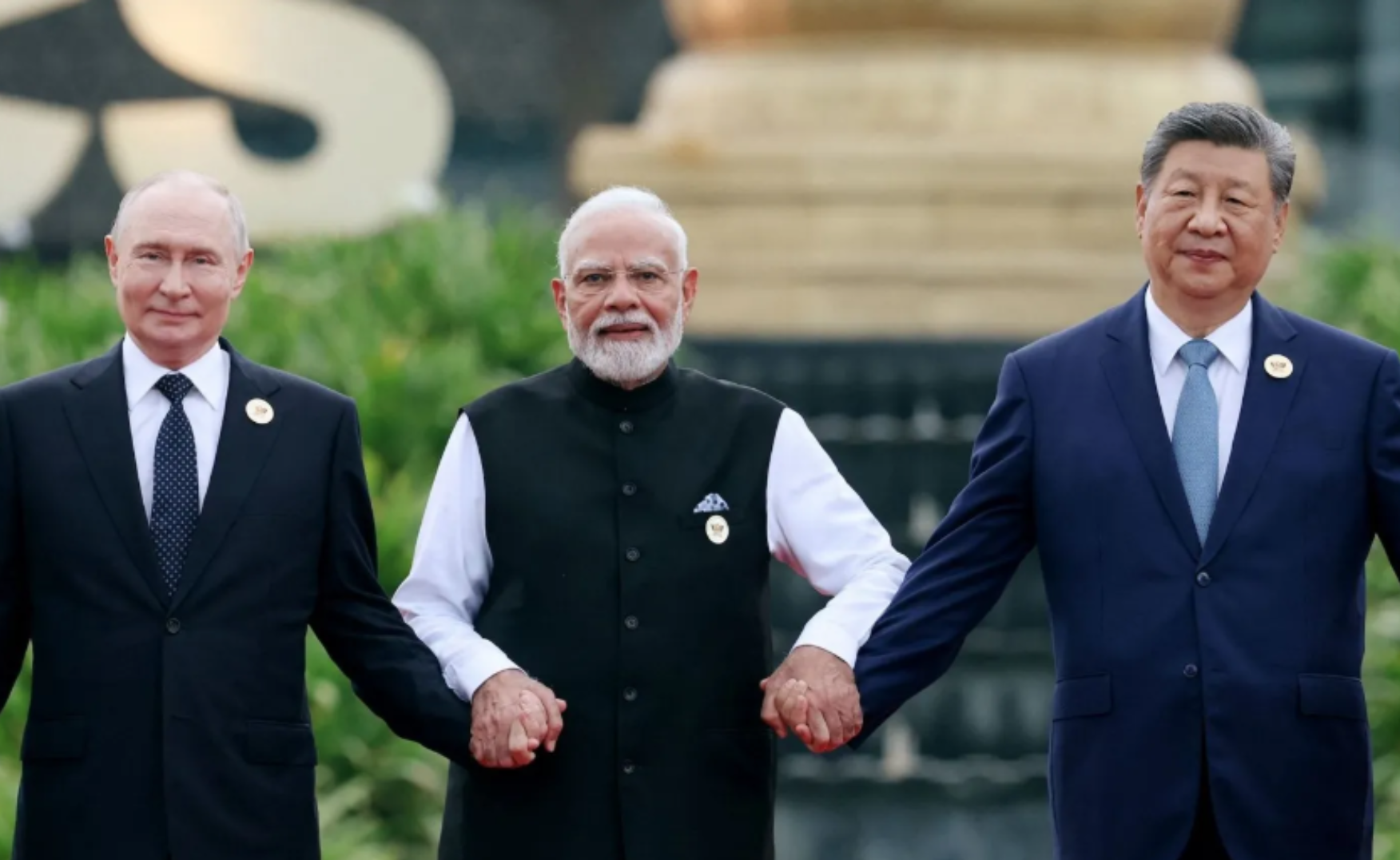
At the meeting itself, Russia seemed a bit subdued. The Summit had its moments, and the one that caught world attention was having Xi, PM Narendra Modi, and Russian President Vladimir Putin in one frame. This is the second time the trio has been captured together. The first being in August-September 2025 at the SCO Summit in Tianjin. It led to Trump saying on Truth Social,[1] “Looks like we’ve lost India and Russia to the deepest, darkest China. May they have a long and prosperous future together!”
These two pictures have raised red flags in the West that BRICS and SCO are increasingly becoming anti-West. However, BRICS being a multilateral forum, the presence of Xi and Putin is normal and in alignment with past practices. The capitals of the West need not read too much into it. On the contrary, their absence would have conveyed a deeper message.
The main focus of the New Delhi summit was to support the Global South. Both the Chair PM Modi and President Xi Jinping emphasised this, and the success of the summit is the adoption of the Delhi Declaration – the second time that India has been able to forge such a consensus, first during the G 20 summit in 2023 and now at the BRICS Summit. This places India in a unique position: soft power supported by strong economic growth and the strategic autonomy it practises amidst extreme global uncertainty.
The Global South agenda was prominent. On Inclusive Global Governance and Strengthening Multilateralism, there was consensus on enhancing the role of Emerging Markets and Developing Countries and Least Developed Countries in global governance, including having equitable geographical representation in the UN Secretariat and other international organisations. Reforms to the World Trade Organisation, Bretton Woods Institutions and the UN system, including its Security Council and a pitch for a female Secretary-General at the UN, were proposed. Without being named, the U.S. faced criticism for imposing unilateral tariffs, non-tariff measures and the blockade of Cuba. At the moment, this criticism is less serious, but it is gaining momentum. The U.S. should take note and be aware of the sensitivities of countries that its actions denigrate.
On the issues of international and regional peace and security, increased global military spending came in for criticism, as were concernson nuclear danger and conflict. Support for disarmament, arms control and non-proliferation was emphasised. Without being named, Israel was criticised for the use of excessive force in Gaza, and Palestine found support for its cause in the Delhi Declaration. The BRICS countries unanimously condemned terrorism and all activities related to it and recommended cross-border cooperation between multiple agencies to fight it.
One of the most important outcomes of the Summit was progress on the BRICS Cross Border Payment Initiative, trade settlements and investments in BRICS local currencies, a BRICS insurance ecosystem, and support for expansion of New Development Bank membership. The SWIFT system, which facilitates international payments, has been politically compromised by Western sanctions and needs an overhaul. Unsurprisingly then, the countries of the Global South are looking for alternatives.
On strengthening cultural and people-to-people cooperation, BRICS Network University plans for the possible inclusion of traditional, indigenous and local knowledge systems as an additional International Thematic Group.
A comparison of this year’s and last year’s declaration in Brasilia indicates that issues like the interests of the Global South, global governance and multilateral institutional reform, AI governance and multilateral trade are perennial agenda items for the BRICS group.
The 2027 mantle falls on China. Xi Jinping laid out a five-point agenda that will likely be the focus of China’s presidency. They are on China’s primary domestic agenda too: open-source inclusive AI, trade and investment facilitation, digital industry cooperation, cooperation in intelligent manufacturing, and science and technology talent development.
A bilateral meeting that was watched keenly in the subcontinent was that between PM Modi and Xi Jinping. However, little progress was made, and the meeting ended with both sides reiterating their respective positions on the bilateral. The eight-point consensus from the 25th Special Representatives Talks between India and China, for resolution of the boundary question in August 2026, did not find mention in the readouts of both countries. This makes it clear that the status quo is maintained, while actual improvement in India-China relations still has some way to go before normalcy can be gained.
BRICS is slowly becoming a formidable group that will have to be taken seriously in issues of global governance, economics and development. This year’s BRICS Summit is particularly important because it preceded the visit of Xi to the U.S. by just a few days. The optics of the BRICS Summit will have been keenly watched in Washington for its effect on Xi’s important bilateral U.S. visit.
Lt Gen S L Narasimhan is the Distinguished Fellow for China and National Security Studies at Gateway House.
This article was exclusively written for Gateway House: Indian Council on Global Relations. You can read more exclusive content here.
For permission to republish, please contact outreach@gatewayhouse.in.
Support our work here.
© Copyright 2026 Gateway House: Indian Council on Global Relations. All rights reserved. Any unauthorised copying or reproduction is strictly prohibited.
References:
[1] “Trump Says India and Russia Appear ‘lost’ to ‘Deepest, Darkest China.’” Reuters. September 6, 2025. https://www.reuters.com/world/china/trump-says-india-russia-appear-lost-deepest-darkest-china-2025-09-05/.