Gateway House Courtesy: Gateway House
4 June 2026

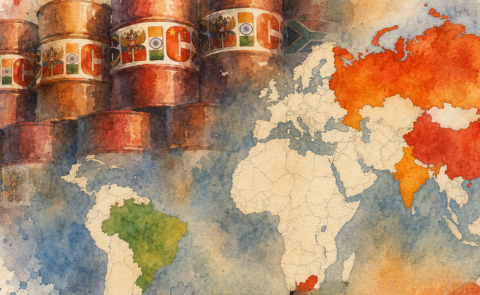
A BRICS Energy Stability Framework

The 2026 Persian Gulf conflict has pushed energy security to the forefront of the BRICS agenda. Divergent national interests prevent the grouping from acting as a unified geopolitical bloc, the growing energy crisis highlights the need for stronger economic cooperation. Proposals such as a BRICS energy reserve, an Energy Stability Fund, and cross-border investments could enhance resilience and be essential if BRICS wants to emerge as a serious economic grouping.
DD India Courtesy: DD India
4 June 2026

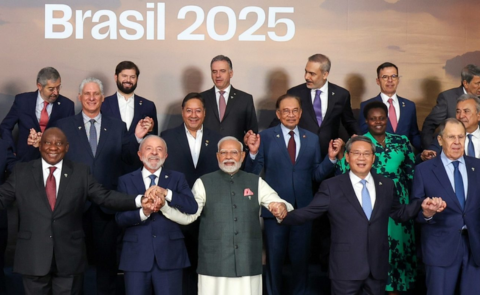
BRICS at a Pivotal Moment

BRICS is too significant to ignore but too fragmented to drive meaningful change for the developing world. The West Asia conflict, U.S. tariff threats over de-dollarisation, UNSC reform divisions, and the presence of regional rivals has exposed its internal strains. Will India’s ongoing 2026 chairship rise above the contradictions, and manage to turn BRICS from a reactive forum into a more assertive and credible global force?

oil Courtesy: KNN
28 May 2026

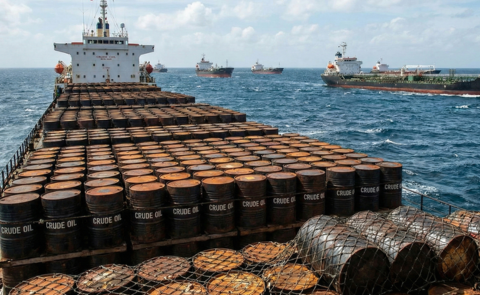
India’s Opportunity in the New Oil Order

The UAE’s recent exit from OPEC, and the US push to sell more oil to India are markers of a new order in the oil world with demand security at a premium. As a major oil importer, India must respond to it smartly. It must develop deeper partnerships with both the UAE and U.S., and a new financial ecosystem and benchmarks for the new order.

Website articles  - 2026-05-28T124708.235 Courtesy: Global Times
28 May 2026

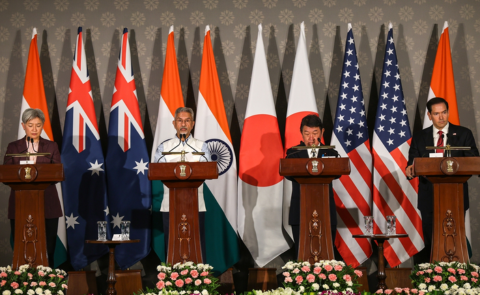
The Quad, reset

The Quad Foreign Ministers’ Meeting, held in New Delhi on May 26, highlighted both the progress and uncertainties surrounding the grouping. Significantly, it reaffirmed U.S. engagement. While the Quad has expanded its agenda and provided some concrete outcomes, the all-important Leaders’ Summit is still not visible – a worry for India’s prolonged chairship since 2024.

Website articles  - 2026-05-21T164114.205 Courtesy: X/@IndiainZimbabwe
21 May 2026

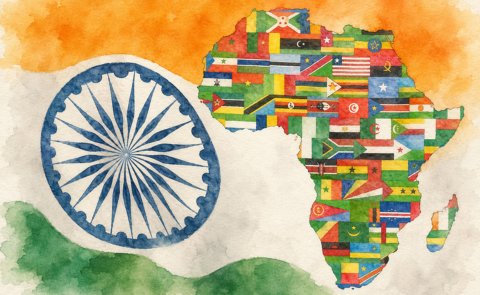
India-Africa: taking stock before the summit

Africa is central to India’s foreign policy, a priority expected to be reaffirmed at the upcoming India–Africa Forum Summit. The much-anticipated event will focus on deepening economic partnerships and expanding strategic cooperation. Ahead of the summit, it is necessary to take stock of the current state of the continental engagement, particularly in trade, investment, technology, and capacity-building.

Website articles  (96) Courtesy: The Secretariat
20 May 2026

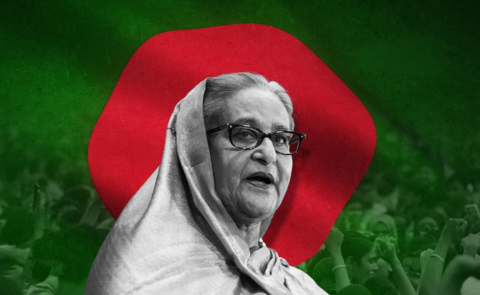
Interview with Sheikh Hasina

Bangladesh elected a new government in February this year after former long-time Prime Minister Sheikh Hasina was ousted from power in a violent mass protest on August 5, 2024. Her party, the Bangladesh Awami League, was banned from participating in this year’s election, which saw the return of the rival Bangladesh Nationalist Party (BNP) under Prime Minister Tarique Rahman. Hasina has been living in India since then and talks about her plans to return to Bangladesh and revive her party’s activities there. She spoke exclusively to Nayanima Basu.

Website articles  (95) Courtesy: Gateway House
14 May 2026

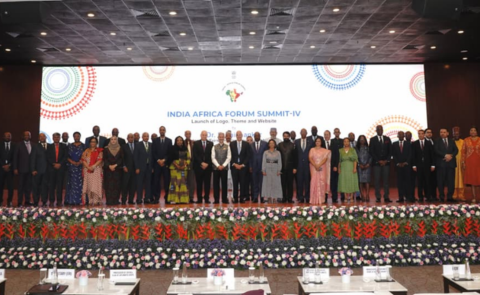
Stacking up the India-Africa summits

The Fourth India-Africa Forum Summit (IAFS-IV) will take place in New Delhi from May 28-31, 2026. It is being held at a time when Africa has actively engaged with several other major partners, placing high expectations on India. Over the last 18 years, the India-Africa partnership has had ambitious goals and some outcomes across diplomacy, trade, education, capacity building, health, and infrastructure development. This will deepen.

Rajiv Bhatia with Aung San Suu Kyi Naypyidaw in 2013 Courtesy: Rajiv Bhatia
14 May 2026

Leaves from my Myanmar diary

Myanmar’s latest political transition offers the illusion of closure, but little clarity. After years of conflict triggered by the 2021 coup, a new administration under Min Aung Hlaing takes charge amid continuing resistance and fragmentation. Is this consolidation or another phase of instability? Reflecting on this question, Ambassador Rajiv Bhatia draws upon his three-decade-long association with Myanmar, including serving as India’s Ambassador from 2002 to 2005.

amb HVS (2) Courtesy: Gateway House
7 May 2026

Foreign policy impact of Bengal elections

The state elections in the eastern states of Bengal and Assam have given a massive mandate to the ruling Bharatiya Janata Party. The opportunity for transformation and progress is enormous, especially as both these states are the crucial connectors to India’s Act East Policy. Harsh Shringla, Member of Parliament and former Foreign Secretary of India, says India’s foreign policy will see multiple benefits from these states.

Website articles  (92) Courtesy: Gateway House
7 May 2026

India’s quest for sovereign AI

India is moving from “digital adoption” to “digital swaraj,” a demand for technological self-reliance. The national discourse is shifting from data sovereignty to broader technological sovereignty. India’s goal is a hybrid model where global innovation meets local control and digital services that align with domestic needs. If successful, this model could offer the Global South an alternative to both U.S. private-led and Chinese state-led digital systems.